The Mystery of the
Uneaten Prey
🔑 Key Takeaway: The Musk
Defense
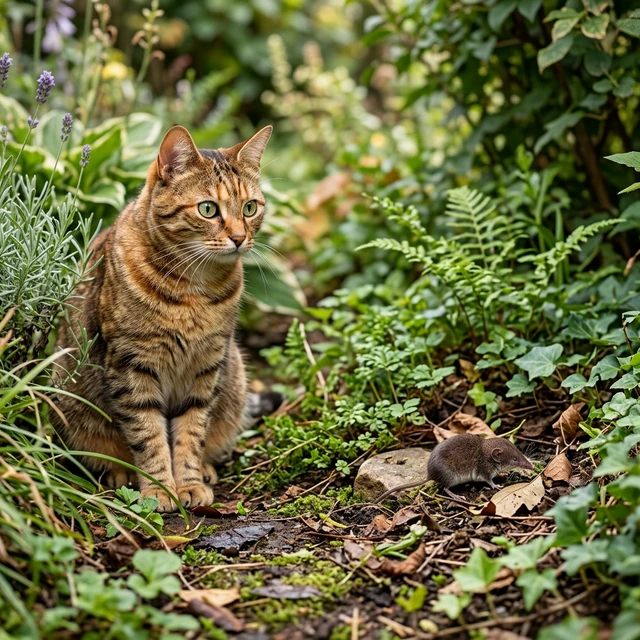
Cats often catch shrews because of their fast, erratic
movements which trigger the feline hunting drive. However, shrews possess specialized
lateral skin glands that secrete a pungent, foul-tasting musk. To a cat’s highly
sensitive palate, a shrew tastes like a mixture of bitter chemicals and rot. They catch
them for practice, but they reject them as food.
It is a common sight for owners of outdoor or indoor-outdoor cats: a “gift” left
on the doorstep that appears to be a mouse but is left completely untouched. Upon closer
inspection, these are often shrews. Shrews are not rodents; they are part of the order
Soricomorpha (insectivores). Their unique biology and chemical defenses make them one of the
few small mammals that are effectively “cat-proof” in terms of edibility.
1. Shrews vs. Mice:
The Biological Distinction
From a cat’s perspective, a shrew is a low-reward target. Unlike mice, which are
rich in fat and protein, shrews have an incredibly high metabolic rate—some species must eat
their own body weight in food every 24 hours just to survive. Consequently, they have very
little body fat, making them a poor nutritional choice even if they were tasty.
- The Venom Factor: Some species, such as the Northern Short-tailed
Shrew, possess venomous saliva used to paralyze insects. While this venom is not
dangerous to a cat upon external contact, it adds to the unpalatability of the animal. - Chemical Signatures: Shrews produce a scent that signals to predators
that they are unwholesome. Cats, which rely heavily on olfactory assessment before
ingestion, quickly learn to recognize this “ignore” signal.
2. The Soricid Musk
Gland: A Chemical Shield
The primary deterrent is the Soricid Musk. These glands are
located on the sides of the shrew’s body and are activated when the animal is stressed or
attacked. The musk contains a variety of volatile compounds that are evolutionarily designed
to be repellant to mammalian carnivores.
| Factor | Mice/Rodents | Shrews (Insectivores) |
|---|---|---|
| Flavor Profile | High fat, neutral odor. | Bitter, acidic, pungent musk. |
| Feline Reaction | Consumption & Ingestion. | Catch, kill (optional), and abandon. |
| Nutritional Value | Excellent calorie source. | High lean mass, negligible fat. |
3. The
Catch-and-Release Paradox
If shrews are so unpalatable, why do cats keep catching them? The answer lies in
the Innate Hunting Drive. A cat’s brain is hardwired to strike at anything
that moves with a certain speed and erratic pattern. Shrews, which are incredibly active and
fast, trigger this motor pattern instantly. The cat’s “capture” sequence is independent of
its “eating” sequence. It is only after the catch—when the cat encounters the smell and
taste of the musk—that the feeding sequence is canceled.

The hunting instinct is separate
from the hunger drive, leading cats to catch what they won’t consume.
Conclusion:
Evolution’s Winning Strategy
The shrew’s strategy is one of the most successful defensive evolutions in the
small mammal world. By being just large enough to be caught but too foul to be eaten, they
ensure that while individual shrews may be killed by hunting practice, the species as a
whole is not a preferred food source for the world’s most efficient predators. For the cat,
the shrew remains a high-value toy, but a zero-value meal.
— Last update —