
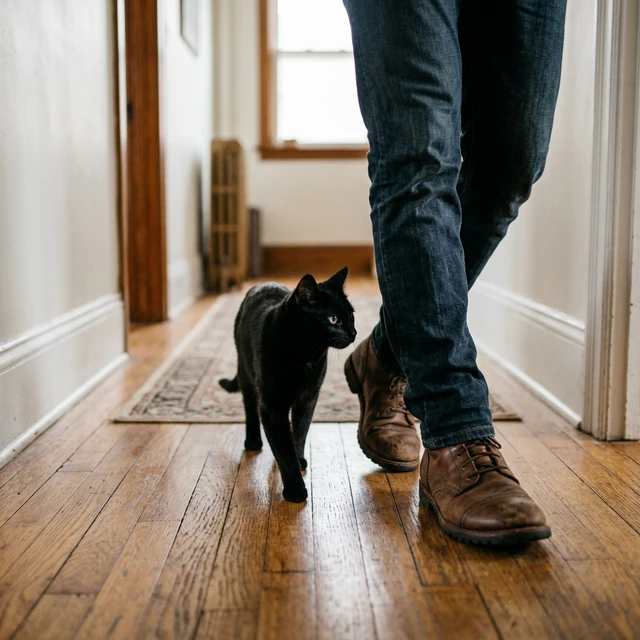
The Psychology of the
Feline Shadow
🔑 Key Takeaway: Neotenic
Attachment
Domestic cats often exhibit **neoteny**—the retention of
juvenile traits into adulthood. In the wild, kittens follow their mother for survival
and learning. By following you, an adult cat is effectively treating you as a surrogate
mother and a source of biological security. It is one of the highest compliments a
feline can pay to a human.
When a cat follows you from room to room, they are engaging in a behavior that
is far more complex than simple attention-seeking. It is a blend of social bonding,
territorial management, and operant conditioning. Understanding the “why” behind the
shadowing requires looking at the feline brain’s perception of territory and safety.
1. Territorial
Co-Patrolling and Mapping
Cats are territorial animals that spend a significant portion of their day
patrolling and marking their boundaries. When you move through the house, the cat perceives
this as a Territory Audit. By following you, they are participating in the
patrol, ensuring that the “shared space” is secure and that no new intrusions have occurred.
- Resource Security: Cats follow the individual they perceive as the
primary gatekeeper of resources (food, water, doors). By staying close, they ensure they
are present for any “resource events” that may occur. - Observation and Learning: Cats are masters of social learning. They
follow you to observe your complex interactions with “unnatural” objects like laptops,
sinks, and vacuum cleaners to assess potential threats or opportunities.
2. Operant
Conditioning: The Reward Schedule
Most following behavior is reinforced through Variable Ratio
Reinforcement. If you occasionally turn around to pet the cat, talk to them, or
give them a treat when they follow you, you have created a powerful psychological habit. The
cat doesn’t know *which* time will result in a reward, so they follow every time to increase
their odds.
| Behavioral Style | Underlying Motive | Feline Perspective |
|---|---|---|
| The Silent Shadow | Social Proximity (Affiliation). | “I feel secure when I am within your pheromone radius.” |
| The Vocal Follower | Request for Service (Food/Play). | “You are moving towards a resource; don’t forget my cut.” |
| Bathroom Shadowing | Territorial Vulernability. | “You are stationary and vulnerable; I will stand guard.” |
3. Curiosity and the
High-Value “New”
Cats have an intense biological drive to investigate change. When you move
between rooms, you are creating Environmental Novelty. Your cat wonders:
“Why is the door opening? Is there a spider? Is there a new box?” Following you is their way
of staying updated on the state of their world.

Whether seeking safety or patrol
help, your cat views you as their social anchor.
Conclusion: The
Compliment of the Shadow
While it might occasionally feel intrusive, having a “feline shadow” is a sign
of a high-functioning relationship. It means your cat has successfully bonded with you as a
social partner and respects you as the leader of their domestic territory. By allowing them
to follow and acknowledging their presence, you reinforce the bond of trust that defines the
feline-human connection.
— Last update —