
Breed
Profile
Owning a Savannah
is like living with a small, intelligent, and affectionate leopard. A hybrid between the
African Serval and a domestic cat, they bridge the gap between the wild and the tame,
offering a pet experience unlike any other.
⚡ Quick Look
Savannahs are categorized by filial generations (F1,
F2, F3, etc.). F1s are the closest to the Serval (50%+ wild blood), while F4-F5s are
more domestic in temperament but retain the stunning spotted coat. They are
high-energy, dog-like cats who love water and leash walking.
History: A Modern
Hybrid
The Savannah breed began in 1986, when a male African Serval famously bred
with a Siamese cat, producing the first kitten named “Savannah.” This miracle kitten
caught the attention of breeders Patrick Kelly and Joyce Sroufe, who worked to establish
the breed standard.
It wasn’t until 2001 that TICA (The International Cat Association) accepted
the breed for registration, and 2012 for championship status. The goal was to create a
cat with the striking, wild look of the Serval but the affectionate, tractable nature of
a domestic cat. Today, they are one of the most prestigious (and expensive) breeds in
the world.
Personality: The
Canine Cat
Savannahs break all the stereotypes about cats being aloof or lazy. They are
intensely curious, highly intelligent, and bond deeply with their owners.
🧠 Problem Solvers
They will learn to open doors, cabinets, and
even turn on faucets. Child-proof locks are often necessary for Savannah owners!
🐕 Dog-Like Loyalty
They play fetch, walk on a leash, and will greet
you at the door. Many love water and will join you in the shower if allowed.
Appearance: Wild
Elegance
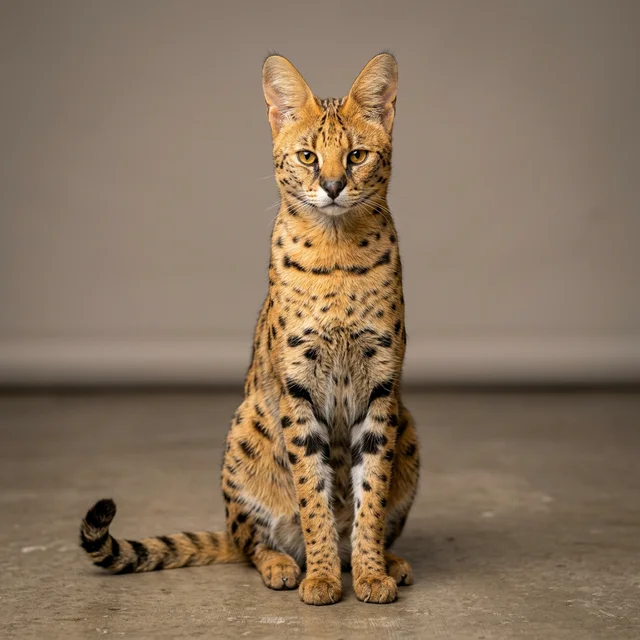
The Savannah stands out for its extreme height and lanky build. They often
appear much heavier than they are due to their tall legs.
- Coat: Always spotted. The standard allows Black, Brown Spotted
Tabby, Black Silver Spotted Tabby, and Black Smoke. - Ears: Large, tall, and set high on the head, often with “ocelli”
(eye-spots) on the back, a trait from the Serval. - Neck: Very long and elegant, contributing to their regal posture.
Health & Care
Savannahs are a healthy, robust breed thanks to their hybrid vigor
(“heterosis”). However, Anesthesia Sensitivity is a known concern; vets
should be aware that their metabolism might process drugs differently than standard
domestics (especially in early generations). Nutrition is critical;
they thrive on high-protein, grain-free diets or raw food (especially F1-F3s).
Legality: Be aware that some states or countries have
restrictions on hybrid cats (especially F1-F4 generations). Always check your local
laws.
Are You Ready For High Energy?
Savannahs are not for everyone. They require time,
patience, and engagement. But for the right person, they are the ultimate companion.
— Last update —