The Molecular Biology
of Fel d 1: Why Cats Cause Sneezing
🔑 Key Takeaway: The
“Allergen Bucket” Theory
Every allergy sufferer has a personal “threshold”—a capacity
to handle a certain amount of allergen before symptoms manifest. Cat allergies are
cumulative. By choosing a breed that produces less Fel d 1 protein,
using a specialized neutralizing diet, and employing high-efficiency air filtration, you
keep the total “allergen load” below your threshold. It is about multi-layered
mitigation, not a magic bullet.
The quest for a “hypoallergenic” cat is often fraught with misinformation.
Scientifically, there is no such thing as an allergy-free cat; even hairless breeds produce
the Fel d 1 protein in their saliva. However, we now understand the molecular mechanics of
feline allergens well enough to create a roadmap for successful coexistence. This guide
explores the biology of feline proteins and the specific breeds and technologies that allow
allergy sufferers to become cat owners.
1. Understanding the
Culprit: Fel d 1 and Dander
Fel d 1 is a secretoglobin protein produced primarily in the feline sublingual,
molar, and sebaceous glands. It is not “hair” that causes allergies, but the dried saliva on
the hair. These protein particles are 1/10th the size of a dust mite, meaning they stay
airborne for weeks and can even be detected in environments where cats have never lived.
- The Stickiness Factor: Fel d 1 has a unique molecular structure that
makes it adhere to fabric, walls, and human skin. Simple cleaning is often insufficient;
true mitigation requires neutralizing the protein at the source. - Hormonal Loading: Intact male cats produce the highest levels of Fel d
1. Neutering can reduce protein production by up to 50% within a month of surgery. - Female Advantage: Statistically, female cats produce lower baseline
levels of the allergen compared to males.
2. The “Neutralizing”
Revolution: Diets and Shampoos
One of the most significant breakthroughs in allergy management is the
development of Fel d 1-neutralizing diets. These foods contain a specific protein found in
eggs (IgY) that binds to the Fel d 1 in the cat’s saliva as they eat. By the time the cat
grooms themselves, the allergen is already neutralized, reducing the “active” allergen load
on the fur by an average of 47% after three weeks of feeding.
3. Featured
“Low-Allergen” Breeds: A Deep Dive
While all cats produce Fel d 1, these breeds are biologically predisposed to
produce less, or their coat structure significantly inhibits the spread of dander.
The Siberian: The Protein Anomaly
Despite their triple coat, Siberians are the only
breed documented to have a genetic mutation that causes naturally low Fel d 1
levels. Many severe allergy sufferers can live with them with minimal symptoms.
The Cornish & Devon Rex: Texture Defense
These “curly” cats lack a true undercoat or guard
hairs. Their fur is primarily ‘down’ hair, which traps dander much more effectively
than standard coats, preventing it from becoming airborne.
4. Engineering the
Home: HEPA and CADR
If you bring a low-allergen cat into your home, you must still optimize the
environment. Standard air filters are insufficient for the microscopic size of Fel d 1.
| Tool | Requirement | Why It Matters |
|---|---|---|
| Air Purifier | HEPA H13 Filter | Captures particles as small as 0.1 microns (Fel d 1 size). |
| Vacuum | Sealed HEPA System | Prevents dander from being blown back out of the exhaust. |
| Laundry | 60°C (140°F) Wash | High heat is required to denature and wash away the sticky Fel d 1 proteins. |

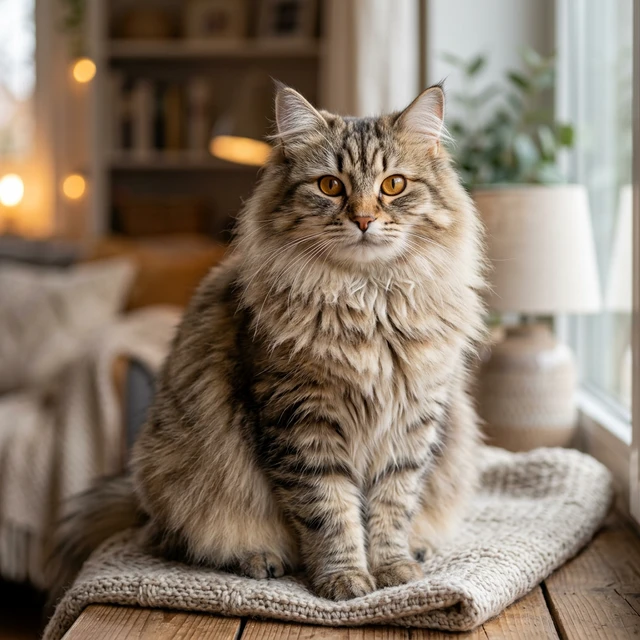
The Siberian cat is a prime example
of how fur length does not always correlate with allergen levels.
5. The “14-Day Reset”
Protocol
When adopting, perform a “room trial.” Keep the cat in a single, non-carpeted
room for 14 days. This allows you to monitor your symptoms as the allergen load builds in a
controlled space. If you remain symptom-free, gradually expand their access to the rest of
the home, keeping the bedroom as a permanent “Cat-Free HEPA Sanctuary.”
Conclusion:
Coexistence is Possible
The dream of feline companionship is achievable for many allergy sufferers,
provided they approach it as a scientific challenge. By selecting a low-protein breed like
the Siberian, utilizing allergen-neutralizing diets, and maintaining a high-CADR HEPA
environment, you can lower the environmental allergen load below your symptomatic threshold.
Knowledge, not avoidance, is the path to feline ownership.
— Last update —