The Art of the
Scratch: A Complete Guide to Scratching Post Training
🔑 Key Takeaway: Scratching
is a Need, Not a Behavior Problem
For a cat, scratching is as fundamental as eating or sleeping.
It serves critical physiological and social functions, from maintaining claw health to
marking territory. By understanding your cat’s specific preferences for texture and
angle, and by using positive reinforcement strategies rather than punishment, you can
protect your furniture while fulfilling your cat’s essential biological drives. The
secret lies in making the scratching post the most exciting and rewarding object in the
home.
One of the most common challenges cat owners face is “destructive” scratching.
However, from a feline perspective, there is no such thing as destructive scratching—only
scratching in the wrong place. To a cat, your expensive leather sofa is simply an
exceptionally sturdy and satisfying scratching surface. Training your cat to use a dedicated
post is not about stopping them from scratching; it is about redirecting their ancient
instincts to a more appropriate target.
1. Why Cats MUST
Scratch: The Biological Mandate
Before we can change where a cat scratches, we must respect why they do it. This
behavior is rooted in millions of years of evolution and serves four primary purposes:
- Maintenance of Claws: Scratching helps remove the outer husks of the
claws, keeping the talons sharp and healthy. If you have ever found half-moon-shaped
“claw shells” around your home, you have seen this maintenance in action. - Scent Marking: Cats have scent glands in their paws. When they scratch
an object, they leave behind visual markers (the shredding) and chemical markers (their
scent). This tells other animals—and themselves—that this is their safe territory. - Stretching and Exercise: A full-body vertical scratch allows a cat to
stretch their shoulder and back muscles, which is vital for their agility as a predator. - Stress Relief: Many cats scratch when they are excited, frustrated, or
waking up from a nap. It is a high-energy “reset” for their system.
2. Choosing the Right
Post: Texture and Geometry
The biggest mistake owners make is buying a post that is too short or too
wobbly. A cat will never use a post that tips over while they are leaning their full weight
into it.
Vertical vs. Horizontal
Observe your cat. Does she prefer to stretch up against the arm of a chair (a
vertical preference) or shred the carpet (a horizontal preference)? Provide a post that
matches their natural inclination. Ideally, a vertical post should be at least 32 inches
high to allow for a full stretch.
The Importance of Texture
Different cats have different “mouthfeels” for their paws. Most prefer
sisal rope because it is durable and offers great resistance. Others prefer
cardboard for the satisfying “crunch” it makes, or untreated
wood for a more natural outdoor feel. If your cat is ignoring their current
post, try a different material.
3. Strategic
Placement: Location, Location, Location
Many owners hide the scratching post in a back room or a basement to keep the
“shredding” out of sight. This is a recipe for failure. Cats scratch to mark their
territory—they want their scent where they spend the most time.
- Sleep Zones: Place a post near where your cat wakes up. They
instinctually want to stretch and scratch immediately after rising. - Entry Points: Placing a post near the front door or the entrance to the
living room helps the cat feel secure in “claiming” the entrance to their domain. - Target Zones: If your cat is currently obsessed with the corner of your
rug, place a horizontal scratcher directly on top of that spot. Once they are using the
scratcher consistently, you can slowly migrate it (inches per day) to a more convenient
location.
4. The Step-by-Step
Training Protocol
Do not force the cat’s paws onto the post. This creates fear and a negative
association with the trainer. Instead, use these positive methods:
- Scenting the Post: Rub a little high-quality catnip or use a silvervine
spray on the post to draw them in. You can also use pheromone sprays like Feliscratch,
which provide a chemical “scratch here” signal. - The Play Method: Use a wand toy to lure the cat toward the post. When
they jump up to grab the toy and their claws sink into the sisal, they will realize it
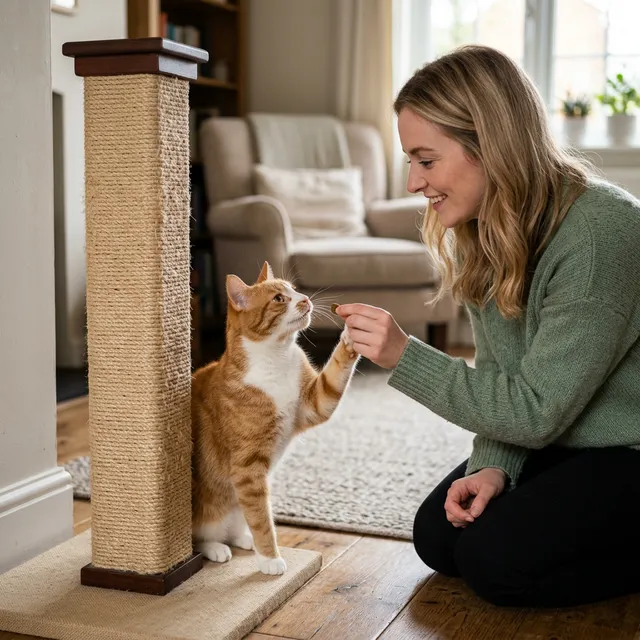
is a satisfying surface. - Immediate Reward: Keep treats in your pocket. As soon as you hear that
“skritch-skritch” sound on the post, praise them and deliver a gourmet treat. Within two
weeks, they will associate the post with the highest rewards.
5. Managing the
“Forbidden” Zones
While you promote the post, you must make the furniture unattractive. Use
temporary tools like double-sided sticky tape (Sticky Paws) on sofa
corners. Cats hate the tactile sensation of sticky surfaces. You can also use
aluminum foil or scent deterrents (like citrus-scented
sprays) on the areas you wish to protect.
without a proper scratching outlet is a home under stress for both the cat and the owner.”
Conclusion:
Consistency is Key
Transitioning a cat from your sofa to a scratching post requires patience and a
bit of detective work. By providing the right surface, in the right place, and rewarding
every successful use, you are speaking your cat’s language. In time, the sofa will become a
boring piece of furniture, and the scratching post will become their favorite gym and social
hub.
— Last update —