The Enrichment Paradigm: Why
Your Flat Cat Needs a Job
🔑 Key Takeaway: The “Hunt,
Catch, Kill, Eat” Cycle
Indoor cats are biological machines built for the hunt. Depriving them
of this predatory outlet doesn’t just make them bored; it can lead to chronic stress,
obesity, and behavioral disorders. Interactive play is the vital bridge between their
domestic life and their wild ancestral needs. By providing toys that engage their sight,
sound, and touch, you are fulfilling a biological mandate that ensures long-term mental and
physical health. Aim for 30 minutes of structured play daily, divided into high-intensity
sessions that mimic the natural hunting cycles of dawn and dusk.
In the wild, a cat is a high-performance athlete and a master strategist. They spend
up to 50% of their waking hours engaged in hunting behaviors—stalking, chasing, and pouncing.
When we bring cats indoors, we provide them with safety and regular meals, but we also
inadvertently remove their “job.” Without a predatory outlet, a cat’s energy turns inward,
manifesting as nocturnal “zoomies,” destructive scratching, or redirected aggression toward
their owners.
1. The Holistic Benefits of
Interactive Play
Play is not just a leisure activity for a cat; it is essential preventative
medicine. The benefits of a consistent interactive play routine touch every aspect of a cat’s
life:
- Cognitive Sharpness: Solving “puzzles” (how to catch the feather) keeps the
brain elastic and prevents cognitive decline in senior cats. - Combatting the Obesity Epidemic: Feline obesity is at an all-time high.
Interactive play is the most effective way to burn calories and maintain lean muscle mass. - Emotional Bonding: Play is the “social glue” between you and your cat. A
session with a wand toy builds trust and a shared language of movement. - Stress and Anxiety Relief: Predictable play sessions provide a sense of
control and security for anxious cats, lowering cortisol levels and promoting better sleep.
2. Human-Led Mastery: The
Wand and the Chase
Manual interactive toys—those requiring your participation—are the gold standard
because they provide the element of **unpredictability** that solo toys can never fully
replicate.
The Art of the Wand Toy
The secret to a successful wand toy session is thinking like prey. A mouse doesn’t
run *toward* a cat; it runs away and hides behind things. Use your wand toy to create a
narrative:
- The Scuttle: Move the toy along the floor at a slow, jerky pace. Stop.
Twitch the tip. This triggers the “stalking” phase of the hunt. - The Flee: Once the cat pounces, have the toy “escape” at high speed into
another room or behind a sofa. - The End Game: Allow the cat to finally catch and “kill” the toy with their
back-leg “bunny kicks.” Immediately offer a high-value treat to signal the end of the
hunting cycle.
The Laser Pointer Debate
While excellent for cardio, lasers are controversial because they offer no “tactile
closure.” The cat chases a dot of light they can never catch, which can lead to light-obsession
and frustration. **The Solution:** Always transition the laser onto a physical toy or a treat at
the end of the session, so the cat feels they have successfully completed the hunt.
3. Solo Enrichment: Keeping
the Spark Alive While You’re Away
Solo toys are the second line of defense against boredom. They are designed to keep
the cat engaged while you are at work or sleeping.
Automatic and Electronic Toys
Modern technology has given us toys that move on their own. Electronic “bugs” that
scurry across floors or battery-operated feather spinners under fabric can provide 10-15 minutes
of excitement. However, be wary of “toy fatigue.” If left on 24/7, these toys become part of the
background furniture. Use them on a timer for intermittent bursts of play.
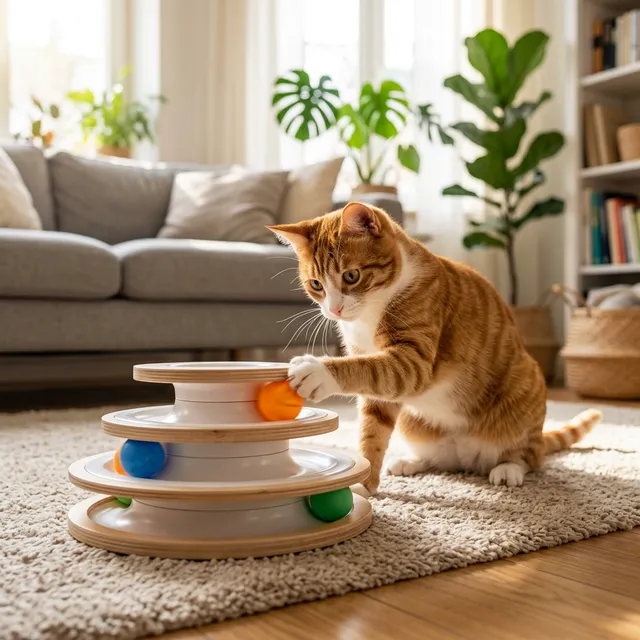
Circuit and Ball Towers
Simple mechanical toys like ball towers (multi-layered tracks with balls) provide
great tactile feedback. Cats love the sound and the resistance of the ball as they bat it
around. These are perfect for cats who enjoy “fishing” for their prizes.
4. Cognitive Play: Puzzle
Feeders and Intelligence Training
Puzzle feeders are the single best way to slow down a “scarf and barf” eater while
simultaneously giving them a brain workout. They turn mealtime into a problem-solving game.
- Beginner: Treat balls that dispense kibble as they are rolled.
- Intermediate: “Digging” puzzles where the cat must use their paws to scoop
treats out of tubes. - Advanced: Stationary boards with sliding compartments that requires
multiple steps to solve.

Puzzle feeders are a vital tool for
mental enrichment and weight management.
5. Sensory Play: Beyond the
Visual
Don’t forget that a cat’s world is driven by sound and scent. Incorporate these into
your toy rotation:
- Silvervine and Catnip: Use fresh herbs or concentrated sprays on toys to
renew interest. Silvervine is often more potent and effective for cats who aren’t sensitive
to catnip. - Sound-Based Toys: Toys that chirp like birds or squeak like mice can
trigger a predatory response even in cats with limited vision. - Crinkle Textures: The sound of a crinkle ball mimics the sound of leaves or
grass rustling, signaling to the cat that something is hiding nearby.
6. The DIY Strategy:
Enrichment on a Budget
You don’t need to spend a fortune to keep your cat happy. Some of the most effective
interactive toys are free:
- The Cardboard Box: Never underestimate the power of a fresh box. Cut holes
in it to create a “whack-a-mole” game with a wand toy. - Paper Bags: Remove the handles (to prevent entanglement) and let your cat
explore the crinkly tunnels. - Toilet Paper Rolls: Fold the ends to create a simple treat-dispensing tube.
Conclusion: The Reward of a
Playful Home
Indoor enrichment is a lifelong commitment. By providing a diverse range of
interactive, solo, and cognitive challenges, you are honoring your cat’s evolutionary history. A
playful cat is a healthy cat, and those 30 minutes of daily play are the best investment you can
make in your feline companion’s long-term quality of life.
— Last update —