
The Foundation of
Feline Stewardship: Beyond the Basics
🔑 Key Takeaway: The “3-3-3
Rule” of Decompression
Bringing a cat home is a major neurological event for the
animal. Follow the 3-3-3 Rule: 3 days to decompress (let them hide),
3 weeks to learn your routine, and 3 months to truly
feel at home. Integration is a marathon of patience, not a race of affection.
Becoming a first-time cat owner is a transformative experience that requires a
shift from human-centric thinking to feline-centric observation. Cats are not
“low-maintenance dogs”; they are sophisticated, semi-solitary hunters with complex
territorial and emotional needs. This guide outlines the ten structural pillars of
successful cat ownership, focusing on biological welfare and behavioral harmony.
1. Environmental
Enrichment Engineering
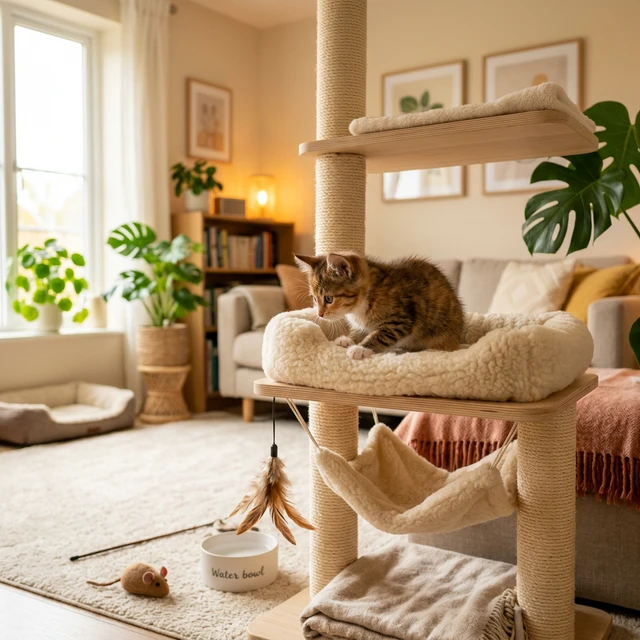
In a domestic setting, a cat’s “territory” is limited by four walls. To prevent
boredom and stress, you must “engineer” your home. This involves maximizing Vertical
Space. Cats view their world in three dimensions; a tall cat tree or a series
of wall shelves provides a “high ground” for safety and hierarchy management.
- The Scratching Topography: Cats need both vertical and horizontal
scratching surfaces. Provide tall sisal posts for stretching and cardboard inclines for
marking. This is a biological necessity for claw maintenance and scent marking, not a
behavioral choice. - Tactical Hiding Spots: Ensure every room has at least one “low-profile”
hiding spot (like a cave bed or a simple cardboard box) where the cat can retreat from
household activity.
2. The “N+1” Litter
Box Protocol
Behavioral issues involving the litter box are the #1 reason cats are returned
to shelters. Most can be prevented by adhering to the N+1 Rule: you must
have one more litter box than you have cats. For a single cat, this means two boxes in
different locations.
| Factor | The Ideal Standard | Why It Matters |
|---|---|---|
| Box Size | 1.5x the cat’s length | Prevents cramping and allows for proper “burying” behavior. |
| Substrate | Unscented, fine clumping | Mimics soft sand/earth; scents can be overpowering to feline olfaction. |
| Location | Quiet, multiple exits | Prevents “trapping” by other pets or household traffic. |
3. Metabolic
Management: Caloric Density
Obesity is a major health crisis for indoor cats. Avoid “free-feeding” (leaving
a bowl full of dry food out all day). Instead, implement Timed, Measured
Feeding using a digital kitchen scale. Caloric needs vary wildly based on age,
weight, and activity level; consult the “Resting Energy Requirement” (RER) formula with your
vet.
4. The Preventive Care
Calendar
Don’t wait for symptoms to visit the vet. Establishing a Diagnostic
Baseline in the first month is critical. This should include blood work to
establish “normal” levels for your specific cat, a fecal exam for parasites, and a dental
assessment.

Early veterinary visits build trust
and establish a clear medical history.
5. Socialization
Windows and Microchipping
Ensure your cat’s microchip is registered to your current information
immediately. In the event of an escape, a microchip is the only permanent form of ID.
Additionally, understand that adult cats have “set” personalities; work with the cat you
have, rather than forcing a specific socialization style.
Conclusion: The Reward
of Stewardship
Owning a cat is a commitment that can last 15-20 years. By investing in the
environmental and biological foundations described in these tips, you set the stage for a
harmonious, low-stress life for both you and your feline companion. Success in cat ownership
is measured in the quiet blinks and relaxed purrs of a cat who feels truly secure in their
territory.
— Last update —