
Breed Profile
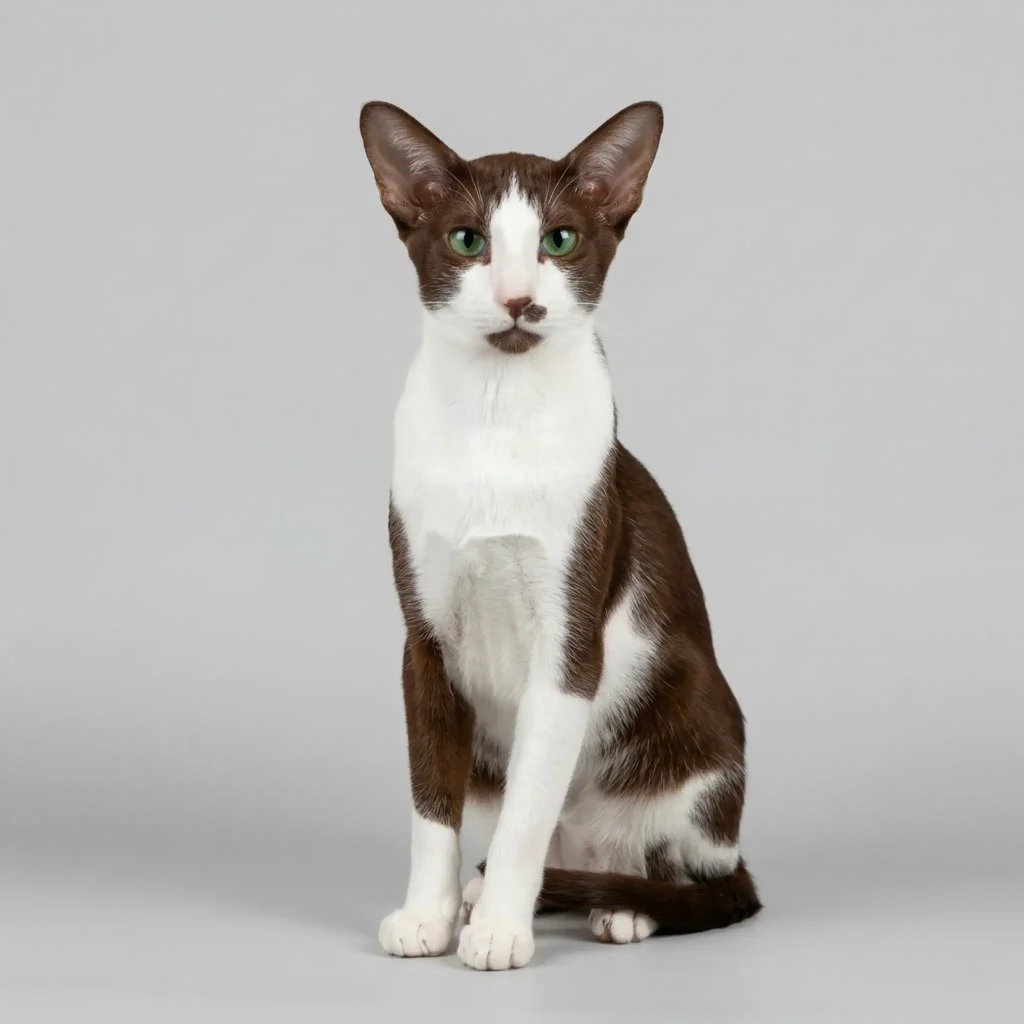
The Oriental Bicolor is essentially a work of art in motion. It takes the sleek, elegant lines of the Oriental Shorthair and adds a dramatic splash of white, creating a cat that looks like it has been dipped in paint. They are vibrant, vocal, and visually stunning.
⚡ Quick Look
This is not a quiet cat. Like all Orientals, the Bicolor is chatty, opinionated, and intensely bonded to its people. They are active, intelligent, and dislike being left alone for long periods.
History: Painting the Oriental
For years, the Siamese and Oriental breeds were strictly defined by their lack of white spotting. Any white on an Oriental was considered a disqualification. This changed thanks to the vision of breeders like Lindajean Grillo in the United States.
In 1979, Grillo began a breeding program crossing Siamese cats with bicolor American Shorthairs. The goal was to introduce the white spotting gene (the gene responsible for the “tuxedo” or piebald look) into the Oriental gene pool while maintaining the breed’s elegant type. She selected the best bicolor kittens and bred them back to Siamese and Orientals to refine the body shape.
TICA granted the Oriental Bicolor championship status in 1983. In Europe, breeders in France and the Netherlands followed similar paths, sometimes using Moroccan street cats or Cornish Rexes as the source of the white gene. Today, they are recognized as a color variety within the Oriental breed group by most associations.
Personality: A Siamese in Paint
If you know the personality of a Siamese, you know the Oriental Bicolor. They are extroverts who demand to be the center of your universe. They will “help” you type, cook, and sleep.
🗣️ The Chatterbox
They have a loud, raspy voice and they use it often. Expect full conversations about the state of their food bowl or the weather.
🧩 Smart & Active
They learn to fetch, open doors, and solve puzzles. A bored Oriental is a destructive Oriental, so keep them busy.
Appearance: The “White Spotting” Gene
The Oriental Bicolor has the same tubular, athletic body as the Siamese: long legs, long tail, and a wedge-shaped head with massive ears. The coat is short, glossy, and lies close to the body.
The defining feature is the white. The white spotting gene is dominant, meaning you only need one parent with the gene to produce bicolor kittens. The patterns can range from just a few white toes to a cat that is mostly white with just a colored tail and ears (Van pattern).
Eye color is typically a vivid green, though blue-eyed or odd-eyed (one blue, one green) Bicolors also exist and are highly prized.
Health & Care
Oriental Bicolors are generally healthy but share the same genetic risks as the Siamese family. Key things to watch for include:
- Amyloidosis: A protein build-up that can affect the liver.
- Progressive Retinal Atrophy (PRA): A genetic eye condition that can lead to blindness.
- Dental Issues: Their wedge-shaped heads can sometimes lead to overcrowding of teeth, so dental hygiene is important.
Is the Oriental Bicolor Right for You?
If you want a quiet, independent cat, this is not it. But if you want a loyal, entertaining, and beautiful companion who will be your shadow, the Oriental Bicolor is perfect.
Tags
— Last update —