
Breed Profile
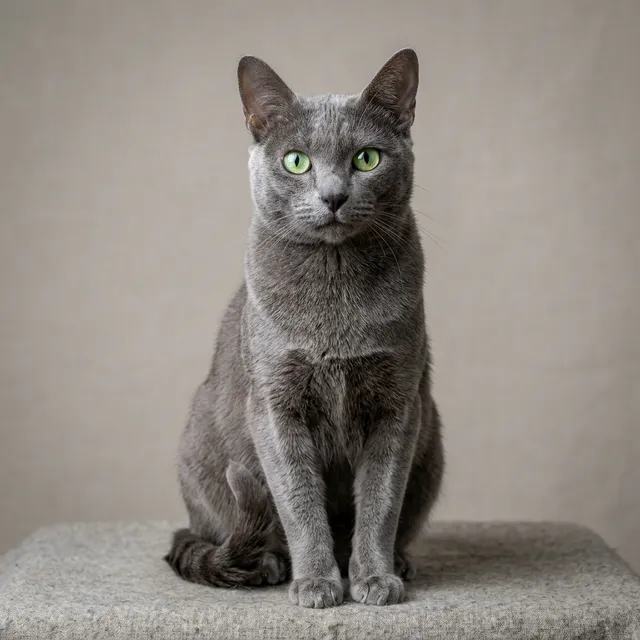
The Korat is more than just a cat; in its native Thailand, it is a living symbol of luck and prosperity. Known as the “Si-Sawat” (which means “color of the sawat seed” and implies prosperity), this silver-blue beauty with the large, luminous green eyes has captivated hearts for centuries. Unlike many modern breeds, the Korat is a natural breed, untouched by human design, preserving the same look and temperament described in ancient manuscripts.
History and Tradition
The Korat is one of the oldest stable cat breeds. Its first recorded description appears in the “Cat-Book Poems” (Tamra Maew), dating back to the Ayutthaya period of Thai history (1350-1767). The book describes the cat as having “hairs as smooth with roots of clouds and tips of silver” and “eyes that shine like dewdrops on a lotus leaf.”
Traditionally, Korats were never sold, only gifted. They were given in pairs to newlyweds to ensure a happy and prosperous marriage. They were also associated with rain ceremonies; farmers would parade a Korat cat around villages to call forth rain for the rice crops, as the cat’s coat color resembled rain clouds.
The breed was named after the Nakhon Ratchasima province (commonly called Korat) by King Rama V. The first pair of Korats arrived in the United States in 1959, imported by Jean Johnson. They were recognized by major cat associations in the 1960s but remain a rare and cherished breed.
Physical Characteristics
The Korat is often described as a collection of hearts. Look closely, and you will see heart shapes everywhere: the head is heart-shaped when viewed from the front, the nose has a heart-like curve, and the chest is broad and muscular.
The Silver-Blue Coat
The Korat comes in only one color: silver-tipped blue. The hair shaft is light blue at the root, darkening up the shaft, and finishing with a silver tip. This gives the coat a shimmering, halo-like effect, especially in sunlight. The coat is single, short, and glossy, lying close to the body without an undercoat, which makes grooming easy and shedding minimal.
Luminous Eyes
The eyes are oversized for the face, giving the Korat an innocent, wide-eyed expression. Kittens are born with blue eyes, which turn amber, and finally develop into a brilliant, luminous green as they mature (sometimes taking up to two to four years to reach full intensity).
Personality and Temperament
Korats are known for their strong personalities. They are intelligent, opinionated, and possessive of their owners. They want to be the center of your universe and will not hesitate to insert themselves into whatever you are doing.
Affectionate and Loyal: They form extremely strong bonds with their families. A Korat will follow you from room to room and often prefers to be near you rather than on you, supervising your activities. They are known to be gentle with children but expect to be treated with respect.
Sensory Sensitivity: Korats have extraordinarily acute senses of hearing, sight, and smell. They dislike loud noises and chaotic environments. A noisy household with constant shouting or banging might stress a Korat. They prefer a calm, predictable environment.
Playful Intelligence: These cats are smart. They can learn tricks, play fetch, and solve puzzles. They are energetic but not hyperactive. They love interactive play sessions that challenge their hunting instincts.
Care and Maintenance
The Korat is a low-maintenance breed regarding grooming.
Coat Care
Because they lack an undercoat, they do not mat. A weekly brushing or even a rubdown with a chamois cloth is enough to remove loose hair and polish the silver tips to a high shine.
Indoor Living
Korats should be kept strictly indoors. Their trusting nature and high value make them targets for theft, and their single coat offers little protection against cold weather. They thrive in a stable home environment where they can rule their kingdom in safety.
Health and Longevity
Korats are generally healthy and long-lived, often reaching 15 to 20 years. However, there is one genetic condition associated with the breed:
- GM1 and GM2 Gangliosidosis: These are fatal neuromuscular diseases. Fortunately, a genetic test was developed years ago. Responsible breeders test all breeding cats, so carriers are identified and not bred. Because of this diligence, the disease is now extremely rare in the breed.
Aside from this, Korats tend to be robust, though they can be sensitive to anesthesia and vaccines because of their low body fat percentage (a trait shared with other Siamese-related breeds).
Is the Korat Right for You?
If you want a cat that is deeply devoted, stunningly beautiful, and quiet but communicative, the Korat is a wonderful choice. They are best suited for homes where they will get plenty of attention and love. They do not like being left alone for long periods.
Bringing a Korat into your home is bringing in a tradition of good fortune. With their heart-shaped faces and silver-lined coats, they truly are a treasure to behold and a joy to live with.
Tags
— Last update —