
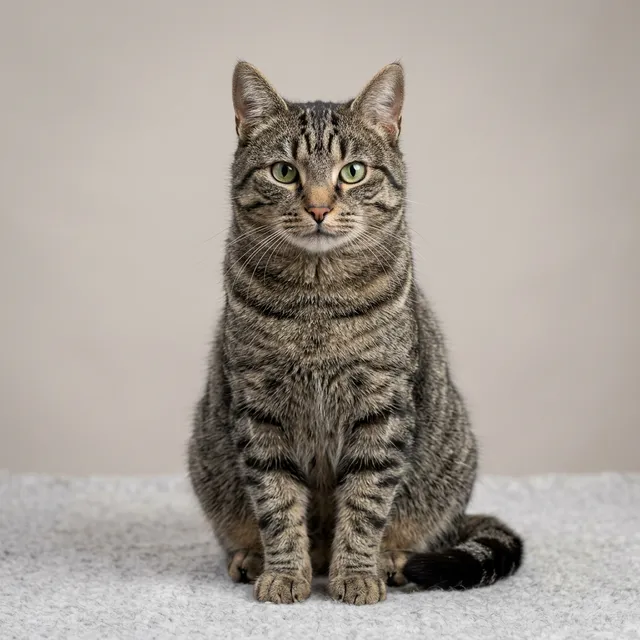
Breed Profile
The European Shorthair is the “original” cat of Europe. While it may look like a common house cat (and indeed, many house cats are of this type), the purebred European Shorthair is a distinct breed with a pedigree that traces back to the granaries of Rome.
⚡ Quick Look
This is a no-nonsense cat. They are robust, healthy, and adaptable. They are excellent hunters, moderately active, and make fantastic family pets because they are balanced in every way—not too clingy, not too aloof.
History & Origin: The Roman Legacy
The European Shorthair is the direct descendant of the cats brought to northern Europe by Roman legionnaires 2,000 years ago. These cats were valued for their ability to protect grain stores from rodents.
For centuries, they bred naturally. In the 20th century, breeders in Scandinavia fought to preserve the original Roman type as distinct from the British Shorthair (which was bred to be cobbier) and the American Shorthair. In 1982, FIFe recognized the European Shorthair as a separate breed. It is very popular in Finland and Sweden but rare in the USA.
Personality: The Adaptable Hunter
European Shorthairs are individuals. Because they haven’t been bred for a specific extreme temperament, they have a balanced personality.
🐁 Expert Mousers
The hunting instinct is strong. If you have a garden, they will keep it pest-free. Indoors, they love interactive play.
🏡 Territory Masters
They are confident and territorial. They bond well with their humans but can be bossy with other cats.
They are generally quiet but will purr loudly when content. They adapt easily to changes in routine.
Appearance: The Classic Cat
The European Shorthair is the archetype of a cat.
- Body: Muscular, medium-to-large, and rectangular. They are less “cobby” (round) than the British Shorthair and more robust than the average alley cat.
- Head: Rounded but slightly longer than it is wide.
- Coat: Short, dense, and glossy. It comes in almost all natural colors and patterns (black, white, tabby, tortie, etc.), but chocolate and lilac are not permitted as they indicate crossbreeding.
Health & Care
This is one of the healthiest breeds in existence. They are the result of natural selection.
Care Requirements:
- Grooming: Minimal. A weekly brush is plenty.
- Activity: They enjoy outdoor access (if safe) or plenty of play indoors. They are not prone to obesity if kept active.
Is the European Shorthair Right for You?
If you want a low-maintenance, healthy, and affectionate cat that looks like a classic feline, the European Shorthair is the gold standard.
Tags
— Last update —