
Breed Profile
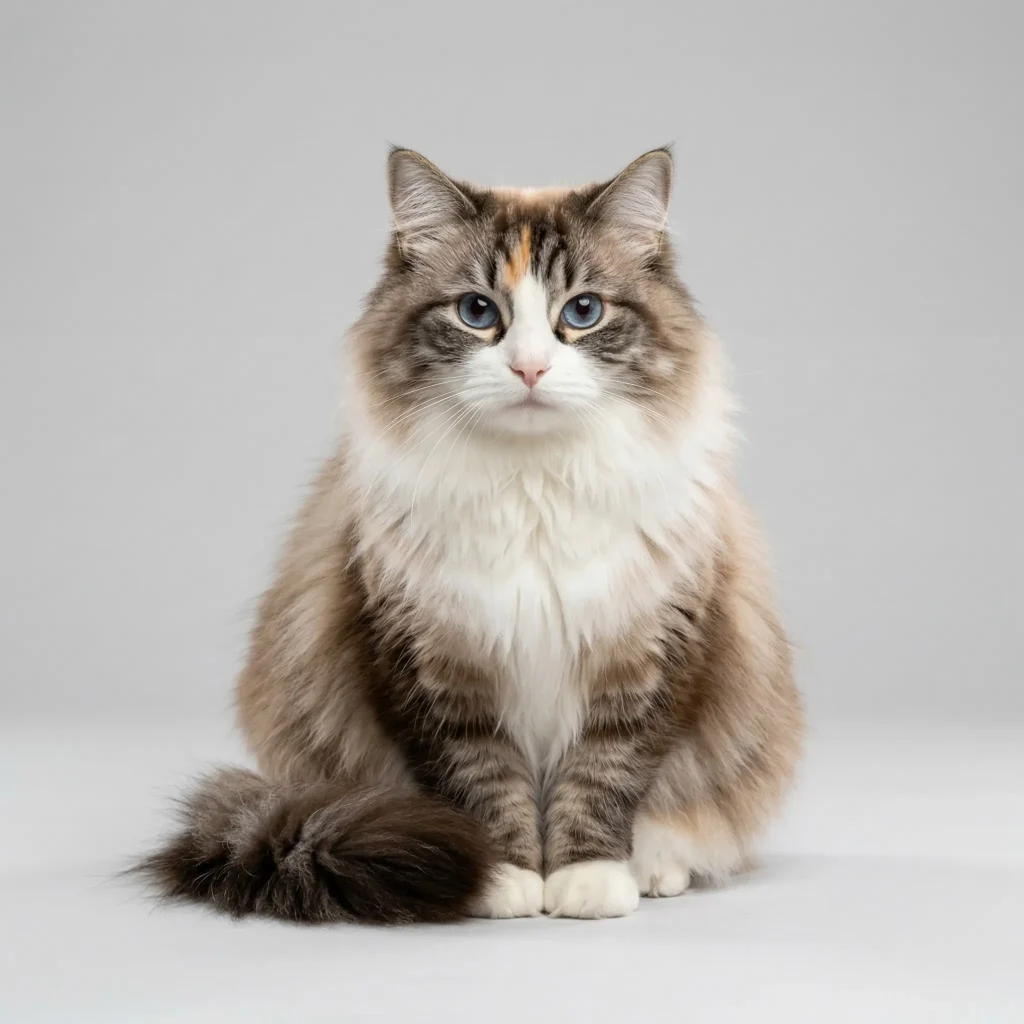
The Ragamuffin cat is a breathtakingly beautiful giant of the feline world, known as much for its sweet, teddy-bear-like nature as for its luxurious, rabbit-soft coat. Often confused with their close cousin, the Ragdoll, Ragamuffins possess a distinct charm and a broader palette of colors that set them apart. These cats are the ultimate lap cats—affectionate, docile, and endlessly patient, making them perfect companions for families, singles, and seniors alike. If you are looking for a pet that combines the loyalty of a dog with the grace of a cat, the Ragamuffin might just be your soulmate.
History and Origins
The history of the Ragamuffin is inextricably linked to that of the Ragdoll. Both breeds trace their lineage back to the 1960s in Riverside, California, and a woman named Ann Baker. Baker developed the Ragdoll breed from a white domestic longhair named Josephine, whose offspring were noted for their exceptionally placid temperaments and tendency to go limp when held. For many years, all breeding was strictly controlled under Baker’s own registry, the International Ragdoll Cat Association (IRCA).
However, in 1994, a group of breeders decided to leave the IRCA due to increasingly strict restrictions and a desire to improve the genetic diversity and health of the breed. Because Ann Baker held the trademark on the name “Ragdoll,” these breakaway breeders could not use it. They renamed their cats “Ragamuffins”—a name that initially began as a joke but stuck due to the breed’s lovable, ragtag origins. To broaden the gene pool and strengthen the breed’s health, they outcrossed their cats with Persians, Himalayans, and domestic longhairs. This significantly expanded the range of acceptable colors and patterns compared to the strict color-point restrictions of the Ragdoll. The Ragamuffin was eventually granted championship status by the Cat Fanciers’ Association (CFA) in 2011.
Physical Appearance
Ragamuffins are substantial, muscular cats with a rectangular body shape and a broad chest. They are one of the largest domestic cat breeds, with males often weighing between 12 to 20 pounds, while females are slightly smaller, typically ranging from 8 to 15 pounds. They are slow to mature, often taking up to four or five years to reach their full size and coat potential. During this time, they retain a kitten-like playfulness that endears them to their owners.
One of the breed’s most defining features is its face. Unlike the Ragdoll’s flat planes, the Ragamuffin has rounded contours, with full cheeks and a sweet, open expression often described as cherubic. Their eyes are large, walnut-shaped, and expressive, coming in a variety of intense colors including blue, green, gold, and aquamarine. Heterochromia (odd-eyed) is also possible.
The coat is truly the Ragamuffin’s crowning glory. It is medium-long, thick, and incredibly dense, with a texture similar to that of a rabbit. Despite its plushness, the fur is resistant to matting. The breed sports a magnificent ruff around the neck, giving them the appearance of a small lion, and a long, fully plumed tail that flows behind them like a train. Unlike the Ragdoll, which is strictly a color-point breed, Ragamuffins come in every color and pattern imaginable—solids, tabbies, tortoiseshells, smokies, and minks are all accepted, with or without white markings.
Personality and Temperament
If you want an independent cat that ignores you, the Ragamuffin is not for you. These cats are legendary for their affectionate, “Velcro” personalities. They thrive on human companionship and will often follow their owners from room to room, supervising daily activities with quiet interest. They are famously known for their tendency to go limp in your arms, melting into a puddle of purring fur when picked up.
Ragamuffins are exceptionally patient and tolerant, which makes them wonderful pets for households with children. They will often submit to being pushed around in strollers or attending tea parties without a fuss (though supervision is always recommended). Their gentle nature also extends to other pets; they typically get along famously with other cats and cat-friendly dogs.
While they are not hyperactive, they are playful and intelligent. They enjoy interactive games like fetch and can be easily trained to walk on a leash or perform tricks using positive reinforcement. They are not known for being high jumpers, preferring to stay close to the ground or on the sofa next to you rather than scaling the tops of kitchen cabinets.
Care and Maintenance
Despite their long, luxurious coats, Ragamuffins are surprisingly low-maintenance when it comes to grooming. Their fur does not have a thick undercoat, which means it is less prone to tangling and matting than other longhaired breeds like the Persian. A good brushing once or twice a week is usually sufficient to remove loose hair and keep the coat looking its best. During the spring and fall shedding seasons, you may need to increase brushing frequency.
Dental hygiene is important for all cats. Brushing your Ragamuffin’s teeth weekly can help prevent periodontal disease. Regular nail trimming and ear cleaning should also be part of your routine. Because they are large cats, ensure you have a sturdy, extra-large litter box and a scratching post tall enough for them to stretch out fully.
Ragamuffins are prone to obesity if overfed, especially since they are not the most high-energy breed. It is crucial to monitor their diet and ensure they get enough exercise through play. Interactive toys, feather wands, and puzzle feeders are great ways to keep them moving.
Health and Lifespan
Ragamuffins are generally a healthy and robust breed with a lifespan of 12 to 16 years, though many live longer with proper care. However, like all purebred cats, they can be predisposed to certain genetic conditions. The most notable concern is Hypertrophic Cardiomyopathy (HCM), a heart condition that causes the thickening of the heart muscle. Responsible breeders screen their breeding cats for the genetic markers associated with HCM to minimize the risk.
Polycystic Kidney Disease (PKD) is another condition to be aware of, which they share with their Persian ancestors. DNA testing is available for both HCM and PKD, so always ask a breeder for proof of health testing before bringing a kitten home. Regular veterinary check-ups are essential to catch any potential issues early.
Is the Ragamuffin Right for You?
The Ragamuffin is an ideal choice for anyone seeking a devoted, affectionate, and low-drama companion. They adapt well to various living situations, including apartments, as long as they receive plenty of love and attention. They do not do well with isolation; if you work long hours and the house is empty all day, a Ragamuffin might become lonely and depressed unless they have a furry friend to keep them company.
Their trusting and non-aggressive nature means they should be strictly indoor cats. They lack the street smarts to defend themselves against predators or traffic. If you can provide a safe, loving indoor environment and want a cat that will be your constant, snuggly shadow, the Ragamuffin will reward you with a lifetime of unconditional love.
Tags
— Last update —
I acquired a little cat who badly needed food. She was nursing six kittens and seemed without support. She brought her kittens to me and they all came in and have been indoor cats for two years. I had at that time five rescue cats living with me. They were all medically-cared for, neutered and spayed, parasites dealt with and vaccinated. They are wonderful and the mother appears to be a Ragamuffin. I am trying to find out which breeds comprise the Ragamuffin. “Mama” is a Torby with dilute black, dilute orange and white. Kittens are “King Tut”, a dilute red tabby/white, pale green eyes; “Buddy”, a dilute black “tuxedo cat”, with dark gold eyes; “Pansy Fern”, a smoked torby, dilute red and dilute black; “Katy”, a calico, dilute red and dilute black; “Precious”, a torty, with dilute red but non-dilute black. All have snow shoes and/or mittens. “Marmalade” was taken by a neighbor who helped me until we got them in and she gave him away(!); he was a red tabby with no white that I remember. These are wonderful cats; each beautiful, loving, smart and sweet. I am guessing this was Mama’s first litter. Who could have left her? Was she pregnant then? She weighed less than five pounds(!) Looking into her eyes would convert any atheist. I am so thankful to have them with me. I live in San Bernardino, 15 minutes from Riverside.
Panthers twin!!!