
Breed Profile
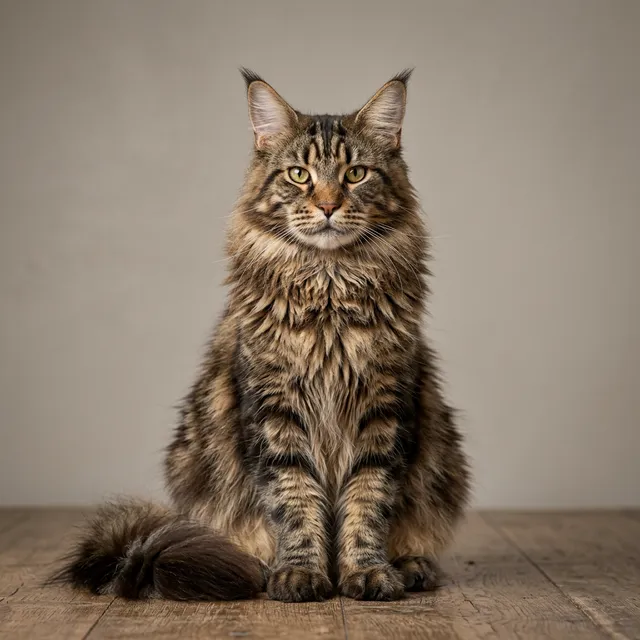
The Maine Coon is widely regarded as the “gentle giant” of the cat world, a title that perfectly captures its impressive stature and sweet, affectionate nature. As one of the oldest natural breeds in North America, specifically native to the state of Maine (where it is the official state cat), this breed has captured the hearts of cat lovers worldwide. Known for their rugged appearance, tufted ears, and bushy tails, Maine Coons are not just physically striking but also incredibly intelligent and sociable companions.
History and Origins
The origins of the Maine Coon are shrouded in mystery and folklore. One popular but biologically impossible myth suggests that the breed resulted from semi-wild domestic cats breeding with raccoons, which would explain the breed’s brown tabby color and impressive tail. Another romantic legend involves Marie Antoinette, the Queen of France. As the story goes, she attempted to escape execution with the help of Captain Samuel Clough, loading her most prized possessions—including six of her favorite Turkish Angora cats—onto his ship. While she never made it to the United States, her cats supposedly reached the shores of Wiscasset, Maine, where they bred with local short-haired cats.
A more grounded theory posits that the breed originated from the matings of local short-haired domestic cats and long-haired breeds brought overseas by seafarers, possibly Vikings or later European sailors. The resemblance to the Norwegian Forest Cat suggests a possible ancestral link to the cats that traveled with Norsemen. Regardless of their exact lineage, the Maine Coon developed into a rugged, working cat, perfectly adapted to survive the harsh New England winters.
Physical Characteristics
Maine Coons are one of the largest domesticated cat breeds. Males typically weigh between 13 to 18 pounds (sometimes more), while females range from 8 to 12 pounds. Their bodies are solid and muscular, designed for power and endurance. They are slow to mature, often not reaching their full size until they are three to five years old.
Their most defining feature is their heavy, water-resistant coat. It is shorter on the shoulders and longer on the stomach and britches (hind legs), giving them a somewhat shaggy appearance. A magnificent ruff around the neck is common, resembling a lion’s mane. The coat comes in a vast array of colors and patterns, with brown tabby being the most recognized. Their large, tufted paws act like snowshoes, helping them navigate snowy terrain, while their long, bushy tails can be wrapped around their bodies for warmth.
The head is medium in width and slightly longer than it is wide, with a square muzzle. The ears are large, wide at the base, and often topped with lynx-like tufts. Their eyes are large and expressive, coming in shades of green, gold, or copper, though white cats may have blue or odd-colored eyes.
Personality and Temperament
Maine Coons are famous for their dog-like personalities. They are loyal, affectionate, and love to be part of the family action. Unlike some breeds that prefer to observe from a distance, a Maine Coon will likely follow you from room to room, supervising your activities with keen interest. They are not typically lap cats but prefer to sit next to you or nearby.
They are highly intelligent and can be trained to perform tricks, walk on a leash, or play fetch. Their playful nature persists well into adulthood; many remain kitten-like throughout their lives. Despite their size, they have a surprisingly soft and chirpy voice. Instead of the typical meow, Maine Coons often communicate with a variety of trills, chirps, and squeaks.
Another unique trait is their fascination with water. Don’t be surprised if your Maine Coon joins you in the shower, plays in their water bowl, or learns to turn on the faucet. This quirk may be a remnant of their ancestors’ days aboard ships.
Health and Care
Generally, Maine Coons are a healthy and hardy breed, with a life span of 12 to 15 years or more. However, they can be predisposed to certain genetic health issues. Hypertrophic Cardiomyopathy (HCM), the most common heart disease in cats, is a concern, though responsible breeders screen for this. Hip dysplasia, a condition often associated with dogs, can also affect this large breed due to their heavy frame. Spinal Muscular Atrophy (SMA) is another rare genetic disorder to be aware of.
Grooming a Maine Coon is less demanding than it appears. Their coat is silky and not as prone to matting as the Persian’s, but a good brushing twice a week is recommended to remove loose hair and distribute skin oils. During shedding seasons (spring and fall), more frequent grooming may be necessary. Their ears should be checked regularly for wax buildup, and their claws trimmed as needed.
Is a Maine Coon Right for You?
If you are looking for a devoted, interactive, and impressive feline friend, the Maine Coon is an excellent choice. They get along well with children, dogs, and other cats, making them perfect family pets. Their gentle demeanor and patience make them adaptable to various living situations, provided they have enough space to move and play. Be prepared for a lot of love, a bit of shedding, and a companion who will undoubtedly become the heart of your home.
Tags
— Last update —