
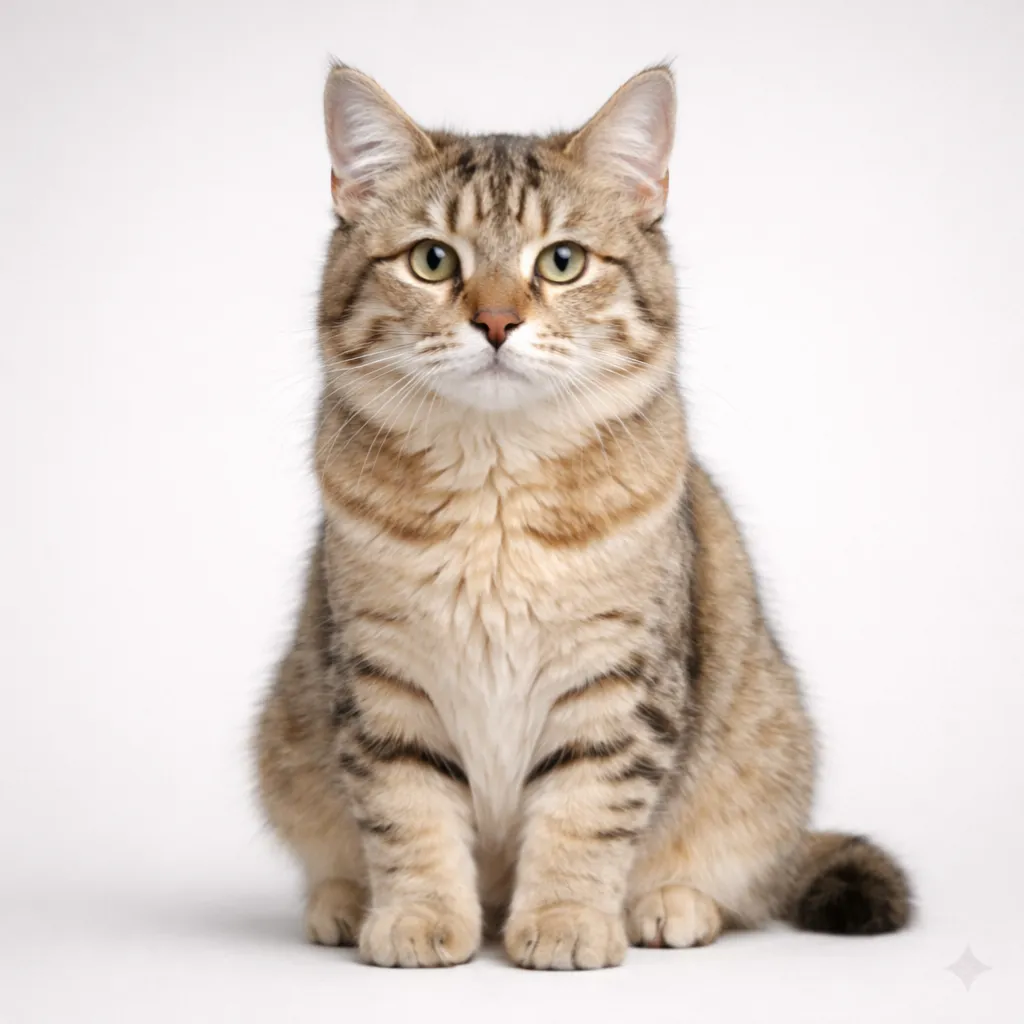
Breed Profile
Have you ever dreamed of owning a wild bobcat but wanted a pet that is safe, affectionate, and legal to keep in your home? Enter the Pixie-bob. This remarkable breed was specifically developed to resemble the North American Coastal Red Bobcat, complete with a short tail, ear tufts, and a muscular build. But do not let the rugged looks fool you; the Pixie-bob is 100% domestic and possesses a personality that is often described as more dog-like than cat-like. They are loyal, trainable, and deeply bonded to their families.
Origins: Legend vs. Reality
The history of the Pixie-bob is steeped in legend. For years, it was believed that these cats were the result of natural matings between wild bobcats and domestic barn cats (known as “legend cats”). While this romantic origin story persists, DNA testing has never found any wild bobcat markers in the breed. Instead, the Pixie-bob is a testament to selective breeding using domestic cats with naturally occurring wild traits.
The breed was founded in the 1980s by Carol Ann Brewer in Washington State. She acquired a male cat with a short tail and a spotted coat, which she believed to be part bobcat. She later adopted another male with a similar look. When these cats were bred, a female kitten named “Pixie” was born. Pixie had the distinct wild look Brewer was aiming for and became the matriarch of the breed. The Pixie-bob gained TICA recognition in 1994 and has been winning hearts ever since.
Appearance: A Domestic Bobcat
The Pixie-bob is a substantial, muscular cat. Females typically weigh between 8 and 12 pounds, while males can reach an impressive 15 to 22 pounds. They have a thick, heavy bone structure and a powerful gait that mimics the rolling stride of a wildcat.
Their face is a key feature: an inverted pear shape with a strong chin, prominent whisker pads, and heavy brows. The eyes are triangular and hooded, giving them a sleepy, wild look. Lynx tips on the ears are highly desirable, adding to the wild aesthetic.
The coat comes in both short and long varieties, but it is always a brown spotted tabby pattern. The spots can be small or large, and the coat often has a “ticking” that gives it a grizzled, wild appearance. And of course, the tail: it can range from a mere inch long to hock length, though some Pixie-bobs are born with full-length tails.
Polydactyl Paws: The Hemingway Trait
One of the most unique features of the Pixie-bob is that they are the only breed where polydactylism (extra toes) is accepted in the breed standard. While a normal cat has 5 toes on the front paws and 4 on the back, a Pixie-bob can have up to 7 toes on each foot! These large, mitten-like paws add to their rugged appearance and are completely harmless to the cat.
Personality: The “Dog in Disguise”
If you want a cat that acts like a dog, the Pixie-bob is your best bet. They are incredibly devoted to their families and will often follow you from room to room. They are known to be easily leash-trained and many enjoy going for walks or car rides (they are excellent travelers). They play fetch, learn commands, and are generally very interactive.
Despite their wild look, they are famously chill. They are not hyperactive like Bengals; instead, they are calm, steady, and patient. This makes them fantastic companions for children and other pets. They rarely vocalize with meows; instead, they communicate with chirps, chitters, and growls (playful ones) that sound quite different from your average house cat.
Health and Care
The Pixie-bob is a generally healthy and robust breed. Because they were bred from a wide gene pool of “legend cats,” they do not suffer from many of the inbreeding issues found in older pedigrees. However, as with all large cats, it is important to monitor their weight to prevent joint stress.
Their coat is easy to care for. Short-haired Pixie-bobs have a thick, woolly coat that resists matting and just needs weekly brushing. Long-haired versions require slightly more attention but are still relatively low-maintenance compared to Persians. They are slow-maturing cats, often not reaching their full size and weight until 3 or 4 years of age.
Is the Pixie-bob Right for You?
The Pixie-bob is an ideal choice for families who want a large, sturdy, and interactive pet. Their calm demeanor makes them suitable for active households with kids and dogs, while their affectionate nature ensures you will always have a cuddle buddy. If you love the look of the wild but the heart of a faithful friend, the Pixie-bob is the perfect breed for you.
Frequently Asked Questions
Is it true that Pixie-bobs are part bobcat?
No. DNA testing has confirmed that Pixie-bobs are 100% domestic cats. Their wild look is the result of careful selective breeding, not wild DNA.
Are Pixie-bobs good travel companions?
Yes, surprisingly so! Many Pixie-bobs enjoy riding in the car and are less prone to travel stress than other breeds. They are often compared to dogs in their willingness to go on adventures.
How much do Pixie-bobs shed?
They are moderate shedders. Both short and long-haired varieties have thick double coats that shed seasonally. Weekly brushing is usually sufficient to keep it under control.
Do Pixie-bobs have health problems due to their short tails?
Generally, no. Unlike the Manx breed, which can have spinal issues associated with the tailless gene, the Pixie-bob’s short tail is natural and typically does not cause health problems. However, responsible breeding is still important.
Tags
— Last update —