Breed Profile
The Peterbald is a strikingly elegant breed that looks like a living, breathing modernist sculpture. Hailing from Russia, this breed combines the hairless gene of the Don Sphynx with the lithe, graceful body type of the Oriental Shorthair. The result is a cat that is not only visually arresting but also possesses a deeply affectionate and intelligent personality. Whether completely bald or sporting a soft velour coat, the Peterbald is a tactile delight and a devoted companion that will stick to you like velcro.
Origins: A Modern Russian Masterpiece
The Peterbald is a relatively young breed, having been created in St. Petersburg, Russia, in 1994. It began with an experimental breeding between a Don Sphynx (a Russian hairless breed with a dominant hair loss gene) and an Oriental Shorthair. The goal was to create a cat with the hairlessness of the Sphynx but the refined, tubular elegance of the Oriental.
The experiment was a resounding success. The breed quickly gained recognition within the Russian cat fancy and eventually spread to Europe and the United States. In 2009, the Peterbald achieved championship status with TICA (The International Cat Association). While still rare, it has developed a passionate following among those who appreciate its unique combination of exotic looks and dog-like loyalty.
The Many Coats of the Peterbald
One of the most fascinating aspects of the Peterbald is that not all of them are bald! The breed has a complex range of coat textures, which can change as the cat matures. There are five main coat types:
- Bald (Sticky): Completely hairless with a somewhat sticky feel to the skin. These cats have no whiskers or eyebrows.
- Flock: Covered in a soft, downy texture that feels like velvet or a peach skin. They appear hairless from a distance.
- Velour: Slightly longer hair than Flock, feeling like plush velvet. The hair is often denser on the extremities.
- Brush: A unique coat of wiry, wavy, or curly hair. It can be sparse or dense and feels coarse to the touch.
- Straight: A normal, short coat like a Siamese or Oriental. These cats do not carry the hairless gene but are still Peterbalds by pedigree and personality.
Regardless of the coat type, the skin is soft, warm, and loose, forming characteristic wrinkles around the head and body.
Appearance: Oriental Grace
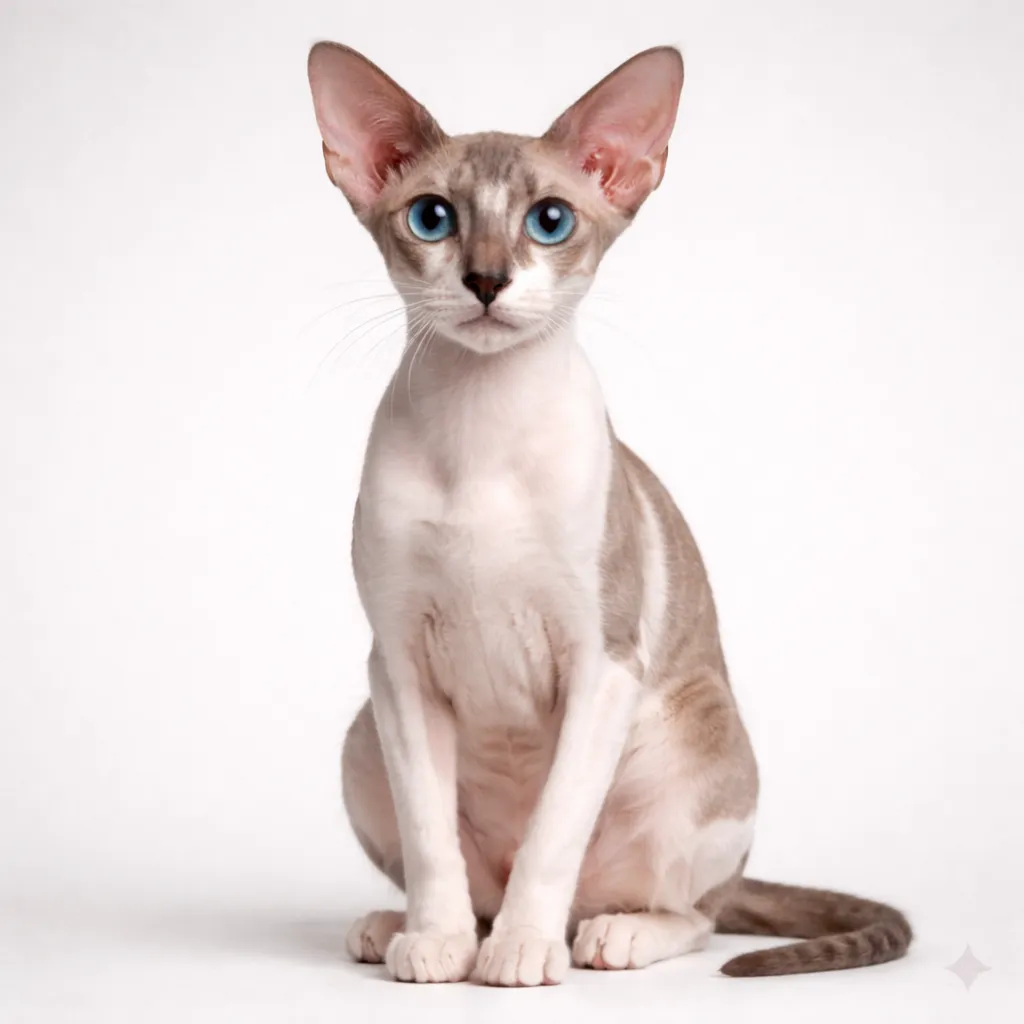
Physically, the Peterbald is the supermodel of the cat world. They share the same body standard as the Oriental Shorthair: long, tubular, and firm. They have long, fine-boned legs and a long, whippy tail. Their paws are distinctively oval with long, dexterous toes—Peterbalds are known for using their paws like hands to grab toys or open doors.
Their head is a long, inverted triangle with huge, bat-like ears set low on the skull. The eyes are almond-shaped and slanted, giving them a mysterious, exotic expression. Because of the lack of fur, their muscle tone is clearly visible, showcasing their athletic build.
Personality: Dog-like Devotion
Peterbalds are aggressively affectionate. They are not independent cats who will ignore you; they want to be with you every second of the day. They will greet you at the door, follow you around the house, sit on your shoulder while you work, and sleep under the covers with you at night. They are often described as “dog-like” because of their loyalty and desire to please.
They are highly intelligent and active cats. They love to play fetch, solve puzzle toys, and learn tricks. Their vocal nature means they will happily hold a conversation with you, chirping and trilling to get your attention. They are generally excellent with children and other pets, often acting as the peacemaker or the social director of the household.
Care and Needs
Caring for a Peterbald requires some specific knowledge, primarily due to their lack of fur.
- Temperature Control: Without a coat, they get cold easily. They need a warm environment and will appreciate heated beds or cat sweaters in the winter. Conversely, they can get sunburned, so direct sun exposure should be monitored.
- Skin Care: Hairless and Flock Peterbalds can accumulate oils on their skin that would normally be absorbed by fur. Depending on the individual cat, they may need occasional bathing or wiping down to keep their skin healthy and prevent acne.
- Metabolism: To maintain their body temperature, Peterbalds have a higher metabolism than coated cats. They often eat more and may require higher-calorie food to stay at a healthy weight.
Is the Peterbald Right for You?
The Peterbald is an exceptional breed for those who want a deeply interactive and loving pet. Their unique look is a conversation starter, but it is their warm, engaging personality that makes owners fall in love. If you are prepared to offer plenty of attention, warmth, and possibly a wardrobe of sweaters, the Peterbald will reward you with a lifetime of unwavering devotion.
Frequently Asked Questions
Do Peterbald cats need sunscreen?
Yes, hairless and flock-coated Peterbalds are susceptible to sunburn. If they are sitting in direct sunlight, even indoors, it is best to limit their exposure or use a pet-safe sunscreen.
Are Peterbalds hypoallergenic?
Not necessarily. While they have little to no hair to shed, they still produce dander and saliva, which are the main allergen sources. However, because there is no fur to trap these allergens, some people find them easier to live with.
What do Peterbalds eat?
Due to their high metabolism (used to keep warm), they often have large appetites. A high-quality, high-protein diet is essential to fuel their energy levels and maintain body heat.
Do I need to bathe my Peterbald?
It depends on the coat type. Hairless ones accumulate oils and may need weekly baths or wipe-downs. Brush-coated ones require less skin care but still benefit from occasional grooming.
Tags
— Last update —