Breed Profile
The German Rex is a living piece of feline history, holding the title of the oldest Rex breed. With its velvety, curly coat and an affectionate, even-tempered personality, this rare gem from Germany offers a unique blend of playfulness and loyalty that captivates cat lovers worldwide.
⚡ Quick Look
The German Rex is friendly, patient, and highly social. Unlike some high-energy breeds, they strike a perfect balance between playful activity and cuddly downtime. They are excellent companions for families and get along well with other pets.
History: A Survivor from East Berlin
The story of the German Rex is one of resilience and accidental discovery. While anecdotal reports of curly-coated cats in Germany date back to the 1930s (specifically a cat named Kater Munk born in 1930/31 in Königsberg), the modern breed traces its lineage to a stray black cat found in the ruins of post-war East Berlin.
In 1951, Dr. Rose Scheuer-Karpin discovered a black curly-coated cat wandering the gardens of the Hufeland Hospital. She named the cat Lämmchen (meaning “Little Lamb”) due to her soft, woolly fur. Lämmchen became the matriarch of the breed. It was later discovered that she carried a spontaneous genetic mutation responsible for the wavy hair, which was distinct yet genetically compatible with the Cornish Rex gene.
During the Cold War, the breed faced near extinction due to the political isolation of East Germany and a limited gene pool. It wasn’t until the reunification of Germany and the dedicated efforts of a few breeders in the 1990s and early 2000s that the German Rex was revitalized. Today, it remains a rare but cherished breed, recognized by major organizations like FIFe.
Personality: The Friendly Acrobat
If you are looking for a cat that acts like a best friend, the German Rex is a strong contender. They are renowned for their people-oriented nature. They don’t just tolerate humans; they actively seek out their company. Expect a German Rex to greet you at the door, follow you from room to room, and “supervise” your daily activities.
🧸 The Cuddle Bug
They love physical contact. Whether it’s sitting on your lap while you work or sleeping under the covers, they crave warmth and affection.
🤸 Playful Spirit
They retain a kitten-like playfulness well into adulthood. They enjoy interactive toys, climbing cat trees, and learning tricks.
Despite their energy, they are not hyperactive or destructive. They are known for their patience, making them suitable for households with children. They are intelligent cats that can learn to play fetch or solve puzzle feeders, but they are just as happy to curl up for a movie marathon.
Appearance: The Velvet Touch
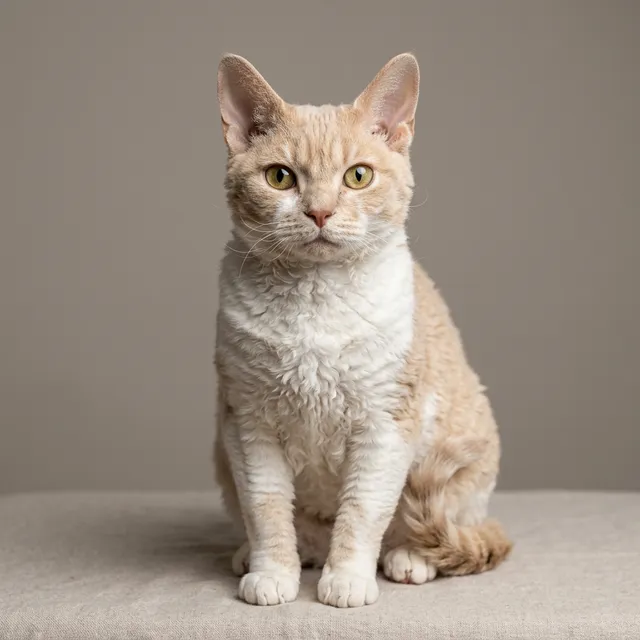
The defining characteristic of the German Rex is, of course, its coat. It is short, silky, and incredibly soft to the touch, often compared to velvet or mole fur. Unlike other cats, the German Rex lacks guard hairs (the coarse outer layer), leaving only the soft undercoat and awn hairs. This gives the fur its unique texture.
- The Curl: The fur can be wavy or curly. The whiskers are also typically crinkled or curled, adding to their whimsical expression.
- Build: They are medium-sized cats, muscular but not heavy. They stand on fine, medium-length legs with oval paws.
- Head: The head is rounded with well-developed cheeks and a strong chin. The ears are medium-sized and broad at the base.
- Eyes: Their eyes are medium-sized, open, and alert, coming in colors that harmonize with their coat.
The breed comes in all colors and patterns, including solid, tabby, tortoiseshell, and colorpoint. However, the focus is always on the quality and texture of the coat rather than the color.
Health & Care
The German Rex is generally a healthy and robust breed with a life expectancy of 12 to 15 years (sometimes longer). Because they were developed from sturdy street cats (like Lämmchen), they do not suffer from many of the congenital defects found in more artificially selected breeds.
Coat Care: Grooming a German Rex is easy but requires a gentle hand. Because they lack guard hairs, their coat is delicate. Brushing should be done sparingly with a very soft brush or a grooming glove to avoid damaging the hair or irritating the skin. Often, simply stroking them with a damp cloth is enough to remove loose hair.
Temperature Sensitivity: Due to their short, thin coat, they are more sensitive to cold than other breeds. They should be strictly indoor cats in cooler climates and will appreciate a heated bed or a warm lap during winter.
Diet: Like all active cats, they need high-quality protein. Monitor their weight, as their love for food combined with a relaxed indoor lifestyle can sometimes lead to obesity.
Is the German Rex Right for You?
If you want a cat that is distinctively beautiful but unpretentious, affectionate without being demanding, and playful without being chaotic, the German Rex is a wonderful choice. They are rare treasures that bring warmth and joy to any home.
Tags
Rex Breeds
Curly Coat
Rare Breed
Affectionate
Germany
— Last update —