
The Neurobiology of
the Human-Feline Bond
🔑 Key Takeaway: The
Oxytocin Loop
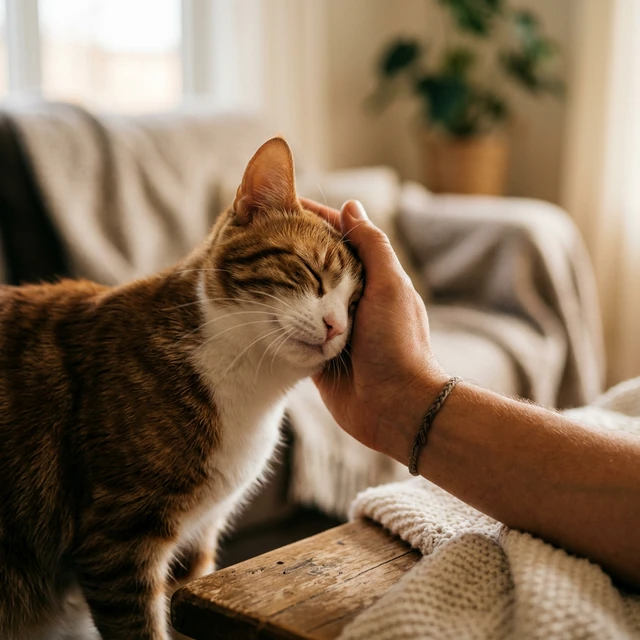
When a cat chooses to cuddle with you, it triggers a mutual
release of oxytocin—the ‘bonding hormone’—in both species. This
neurological feedback loop reduces cortisol (stress hormone) levels and lowers heart
rates. Cuddling is not just a preference; it is a shared biological mechanism for
emotional regulation and social stability.
Cuddling in cats is a sophisticated behavior rooted in evolutionary survival,
kittenhood development, and complex social dynamics. While cats are often characterized as
“solitary,” they are actually social animals that form deep “colony” bonds. Choosing to
cuddle with a human is the highest expression of community inclusion in the feline world.
1. Thermal Economics:
The Quest for 101.5°F
A cat’s normal body temperature is significantly higher than a human’s (100.5°F
to 102.5°F). Maintaining this temperature requires significant metabolic energy. Cuddling is
an efficient way of Thermal Huddling. By using your body heat (specifically
from your chest, lap, or head), a cat conserves its own energy reserves. This is why cats
are more prone to cuddling in cooler environments or following a meal.
2. Vulnerability and
Defensive Instincts
In the wild, sleep is the most vulnerable state for a predator. When a cat
sleeps on or near you, they are effectively using you as a Sentinel. They
trust you to detect threats while they are in a state of reduced awareness. This choice
reflects a profound level of safety and security within the territory you share.
| Cuddle Style | Behavioral Meaning | Instinctual Root |
|---|---|---|
| Chest Sleeping | Highest level of intimacy. | Seeking the rhythmic sound of your heartbeat, mimicking the womb/kitten pile. |
| Lap Cuddling | Interactive bonding. | Facilitates mutual grooming and pheromone exchange (Bunting). |
| The “Back-to-Back” | Territorial security. | Protecting each other’s “blind spots” (sides/rear). |
3. The Healing
Frequency of the Purr
Cuddling is almost always accompanied by purring. Feline purrs vibrate at a
frequency between 25 and 150 Hertz. Clinical research suggests that
frequencies in this range can improve bone density and promote the healing of tendons and
muscles. When a cat purrs while cuddling with you, they are essentially providing a
low-frequency therapeutic treatment for both themselves and their human partner.

Cuddling is a physiological exchange
of trust, warmth, and healing purr frequencies.
4. Scent-Mapping and
Group Identity
Cats use Allorubbing (cuddling and rubbing) to create a “group
scent.” By mixing their pheromones with yours, they verify that you belong to their family
unit. This scent-sharing is critical for maintaining peace in a multi-species household.
Conclusion: The
Language of Physical Presence
To a cat, physical proximity is a valuable currency. By choosing to cuddle, your
cat is communicating that you are a source of warmth, a protector of their safety, and a
vital member of their pride. Respecting their “cuddle consent”—allowing them to initiate and
end sessions—is the foundation of a lasting, respectful partnership built on feline-centric
trust.
— Last update —