
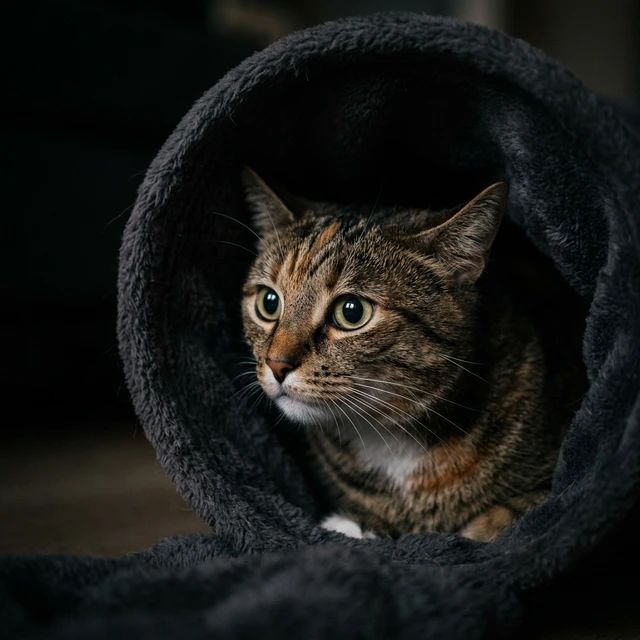
The Silent Struggle: A
Comprehensive Guide to Feline Anxiety
🔑 Key Takeaway:
Understanding the “Hidden” Emotions
Feline anxiety is a complex emotional state that often goes
unrecognized because cats have evolved to mask vulnerability. By learning to decode
subtle body language—from whisker tension to grooming patterns—and providing a “secure
base” environment, owners can significantly improve their cat’s quality of life.
Managing anxiety is not about “fixing” the cat, but about creating a world where they
feel safe enough to express their natural behaviors.
For many cat owners, the image of a feline is one of serene independence.
However, beneath the calm exterior, many domestic cats struggle with various forms of
anxiety. In the wild, cats are both predators and prey, a dual nature that makes them highly
sensitive to changes in their environment. In a domestic setting, this sensitivity can
manifest as chronic stress or acute anxiety, leading to a range of behavioral issues that
affect the bond between the cat and its human family.
1. The Biological
Roots of Feline Anxiety
To help an anxious cat, we must first understand why they feel this way.
Evolutionarily, a cat’s survival depended on being hyper-aware of their surroundings. Any
“unpredictability”—a new person, a loud noise, or even a rearranged living room—can trigger
the amygdala (the brain’s emotional center) to send out a stress response.
When a cat is in a state of high arousal, their body is flooded with adrenaline
and cortisol. If these levels remain elevated for too long, the anxiety becomes
“generalized,” meaning the cat is in a constant state of alert. This is not a “choice” the
cat makes; it is a physiological reaction that requires environmental and sometimes medical
intervention to recalibrate.
2. Decoding the Subtle
Signs of Stress
Unlike dogs, who might pace or whine, cats often express anxiety through
displacement activities or subtle shifts in posture. Recognizing these early signs
can prevent a minor stressor from becoming a major behavioral problem.
Physical Markers:
- Whisker Position: Whisker pads that look “puffed” or whiskers pulled
tightly back against the face are clear signs of tension. - Tail Language: A low-carried tail, or one tucked tightly under the
body, indicates a high level of fear. A tail that flickers only at the tip suggests
inner conflict or irritation. - Piloerection: While a fully “puffed” cat is obviously scared, look for
subtle “rippling” of the skin along the back, which can signify over-stimulation or
anxiety. - The “Crouch and Freeze”: An anxious cat will often try to make
themselves as small as possible, crouching low to the ground with their head below their
shoulders.
Behavioral Indicators:
- Over-grooming (Psychogenic Alopecia): Cats find grooming self-soothing.
When stressed, they may groom the same spot (usually the belly or inner thighs) until
they are bald. - Inappropriate Elimination: Urinating outside the litter box is often a
“scent-marking” behavior used to make the environment smell more like themselves, which
provides a sense of security. - General Withdrawal: A cat that suddenly stops greeting you at the door
or napping in their favorite open spots may be seeking “safety” in hiding.
3. Common Triggers in
the Modern Home
What seems like a minor change to us can be a monumental shift for a cat. Common
triggers include:
- Territorial Competition: Seeing a neighborhood cat through a window can
cause “redirected aggression,” where the cat attacks its housemate because it cannot
reach the intruder. - Lack of Vertical Space: Cats feel safest when they can look down on
their domain. A “flat” home with no cat trees or shelves forces a cat to stay on the
ground, where they feel more vulnerable. - Predictability Gaps: Inconsistent feeding times or sudden loud social
gatherings can disrupt a cat’s sense of safety.
4. Comprehensive
Solutions: Creating a Secure Base
Managing anxiety effectively requires a multi-pronged approach that addresses
both the environment and the cat’s internal state.
Environmental Enrichment
The goal is to provide the cat with a sense of control over their territory.
This includes:
- The “High Road”: Install wall-mounted shelves or high cat towers. A cat
that can travel through a room without touching the floor is inherently more confident. - Pheromone Therapy: Synthetic pheromones (like Feliway) mimic the “happy
markers” cats leave when they rub their cheeks on furniture. This sends a chemical
signal to the brain that the area is safe. - Safe Retreats: Every cat needs at least one “no-human-allowed” zone—a
quiet closet corner or a darkened box where they are never disturbed.
Interaction Strategies
Change how you interact with your cat to build trust:
- Consent-Based Petting: Use the “3-second rule.” Pet the cat for three
seconds, then stop and wait. If the cat leans in or rubs against you, continue. If they
look away, give them space. - The Slow Blink: Direct eye contact is a threat in the feline world. A
“slow blink” (closing your eyes slowly while looking at the cat) is the feline
equivalent of a “peace sign.”
5. When to Seek
Professional Help
If environmental changes and behavioral training do not show results within a
few weeks, or if the cat is harming themselves through over-grooming, it is time to consult
a veterinarian or a certified feline behaviorist. In some cases, short-term anti-anxiety
medication can “lower the ceiling” of the cat’s stress, allowing them to finally learn and
respond to behavioral training.
feels too loud, too small, or too unpredictable for a feline’s ancient instincts.”
Conclusion: The Path
to a Calmer Cat
Patience is the most important tool in addressing feline anxiety. Healing the
emotional state of a cat takes time—often weeks or months. By consistently providing a
predictable routine, plenty of vertical space, and respectful social interaction, you can
help your anxious cat transition from a state of survival to a state of thriving.
— Last update —