
The Botanical Instinct: Why
Your Cat Craves Greens
🔑 Key Takeaway: Folic Acid and
Digestive Mechanics
Cats are obligate carnivores, but their wild ancestors regularly
ingested vegetation. This behavior serves a dual purpose: providing folic
acid (a B-vitamin essential for hemoglobin production) and acting as a natural
emetic to clear the digestive tract of hair and parasites. To stop a cat from eating “bad”
plants, you must satisfy their biological need for “good” greens.
The intersection between indoor gardening and cat ownership is often a dangerous
one. While plants provide essential oxygen and psychological benefits to humans, they represent
a metabolic minefield for felines. This guide breaks down the science of plant toxicity and
provides a professional framework for creating a “Shared Indoor Jungle” that is safe for all
inhabitants.
1. The Toxic Top Tier:
Beyond Just GI Upset
Most plant ingestions cause mild vomiting or diarrhea. However, a small subset of
common houseplants triggers systemic organ failure. Understanding the *mechanism* of these
toxins is vital for emergency recognition.
- The Lily Lethality (Lilium and Hemerocallis): Unlike other pets, cats are
uniquely sensitive to an unidentified water-soluble toxin in “true lilies.” Ingestion of
even a single leaf, or licking the pollen off their fur, causes acute renal tubular
necrosis (total kidney failure) within 24-72 hours. Action:
True lilies must have zero presence in a cat-owning home. - Sago Palm (Cycas revoluta): These contain cycasin, which is highly
hepatotoxic. Even the seeds are deadly. Survival rates for Sago Palm ingestion are typically
less than 50% even with aggressive treatment. - The Oxalate Irritants (Philodendron, Dieffenbachia, Pothos): These plants
contain microscopic, needle-shaped calcium oxalate crystals. When chewed, they pierce the
oral mucosa and throat, causing immediate burning, drooling, and swelling that can impede
breathing.
2. Behavioral Redirection:
The Edible Garden
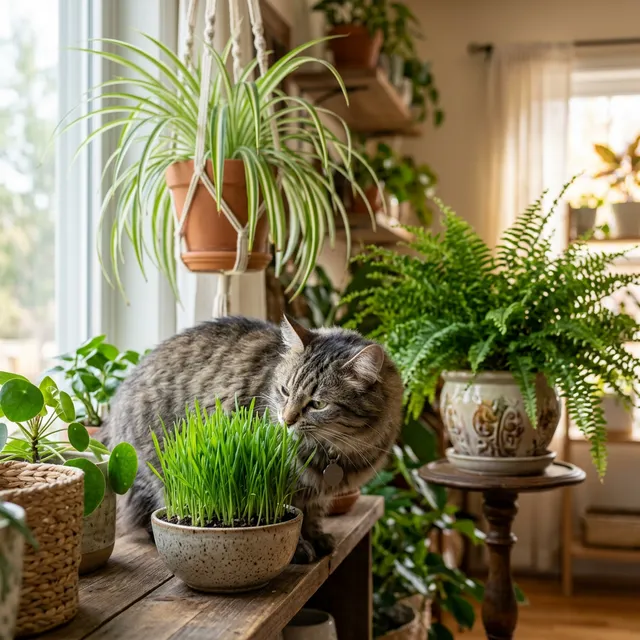
Instead of a ban on all greenery, provide a dedicated “Feline Salad Bar.” This
satisfies the instinctual urge and prevents the cat from sampling your expensive (and
potentially toxic) ornamentals.
Cat Grass Varieties
Don’t settle for one type. Mix **Oat Grass** (sweet and
tender), **Wheatgrass** (nutrient-dense), and **Barley** (fast-growing) to provide a
varied texture and flavor profile.
Silvervine and Catnip
Growing live catnip or silvervine (Actinidia polygama)
provides olfactory enrichment and a safe, euphoric chewing experience that distracts
from other plants.
3. Advanced Deterrence and
Plant Engineering
If you must have plants that are *mildly* toxic or just delicate, you need more than
just a spray. You need structural defense.
| Method | Application | Why It Works |
|---|---|---|
| Lava Rocks/Pebbles | Cover topsoil with 1-2 inches of heavy stone. |
Prevents the “Litter Box Factor”—stops cats from digging in the cool, moist soil. |
| Bird Netting | Wrap delicate palms or indoor trees in fine, transparent mesh. |
Creates a physical barrier that doesn’t ruin the aesthetic but prevents leaf-nibbling. |
| Citrus Oil Spray | Mist the *pots* (not the leaves) with diluted lemon essential oil. |
Cats have 200 million scent receptors; the strong citrus scent creates a “stay-away” zone. |
4. Creating the Safety-First
Indoor Jungle
Focus your collection on plants verified as safe by the ASPCA. These species can be
nibbled occasionally without risk of more than a mild stomach upset.
Safe Feline-Friendly Species:
- Spider Plants: Be aware their leaves contain mild hallucinogenic compounds
similar to catnip; cats love them! - Boston Ferns: Classic, prehistoric-looking, and completely non-toxic.
- Calathea (Prayer Plants): Beautiful patterns and feline-safe.
- Areca Palms: A safe alternative to the highly toxic Sago Palm.

Redirecting interest to safe ‘cat grass’
is the most successful long-term strategy.
Conclusion: Harmony in the
Greenhouse
Living with a cat doesn’t mean having a house devoid of nature. It means being a
conscious botanist. By removing the “Top Tier” toxins (Lilies and Sago Palms), providing a
dedicated grazing zone of digestive-friendly grasses, and using physical barriers for your
prized ornamentals, you create a home that is both beautiful and biologically safe.
— Last update —