
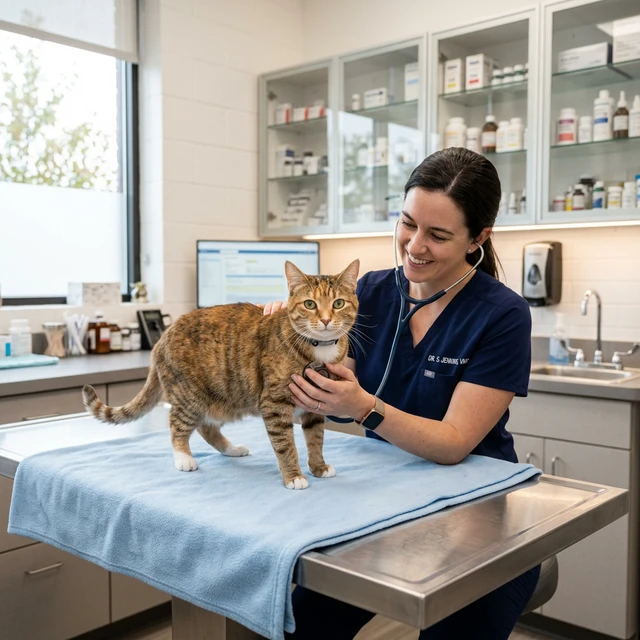
The Fear-Free Clinic: A
Comprehensive Approach to Feline Healthcare Anxiety
🔑 Key Takeaway: The Cumulative
Nature of Stress
Feline anxiety at the vet is not a single event but a cumulative
“stacking” of stressors—from the sudden appearance of the carrier to the vibration of the
car and the scent of dogs in the lobby. By dismantling each layer of the stress stack, you
transform a traumatic event into a manageable task. Preparation begins 72 hours
before the appointment.
For many owners, the struggle of getting a cat into a carrier is so stressful that
they delay essential veterinary care until an illness is advanced. This “vet avoidance” can lead
to shortened lifespans. Integrating Fear-Free principles into your routine is not just about
comfort; it is a vital component of long-term survival. This guide provides a strategic roadmap
for a calm, professional, and health-focused veterinary experience.
1. The Carrier as a
Sanctuary, Not a Trap
The most common mistake is storing the carrier in a garage or attic, only bringing
it out when it’s time to leave. This immediately triggers the “fight or flight” response.
- The Environment of Trust: The carrier should be a permanent piece of home
furniture. It should be lined with a familiar blanket and used as a nap spot. If the carrier
only appears for vet visits, its mere presence becomes a predictor of fear. - The Mechanics of Entry: Hard-sided carriers with a top-opening or
“clamshell” design (removable top half) are superior. This allows the vet to examine the cat
while it remains nestled in its familiar bedding, providing a sense of security. - Synthetic Pheromone Training: Spraying the interior with
Feliway or similar pheromone mimics 30 minutes before use creates a
chemical “safe zone” that reduces cortisol levels in the brain.
2. Pharmacological Support:
The Role of Pre-Visit Medication
For some cats, behavioral preparation is not enough. “Chemical restraint” or
pre-visit pharmaceuticals have revolutionized feline medicine, allowing highly anxious cats to
receive thorough exams without the risk of injury to themselves or the staff.
| Medication | How It Works | Timing |
|---|---|---|
| Gabapentin | A mild sedative and analgesic that reduces “anticipatory anxiety.” |
90-120 minutes before the visit. |
| Prazosin | Used for cats whose stress specifically manifests as urinary blockages. |
As prescribed by the vet. |
| Alprazolam | A potent anxiolytic for extreme phobias or travel motion sickness. |
1 hour before travel. |
3. Choosing the Right
Clinic: The Fear-Free and Cat-Friendly Distinction
Not all clinics are created equal regarding feline needs. Look for certifications
that demonstrate a commitment to feline-specific care.
- Fear-Free Certification: Staff are trained to use gentle handling
techniques, avoid eye contact, and use distraction (like treats) rather than force. - Cat-Friendly Practice (CFP): This designation from the AAFP ensures the
clinic has cat-only waiting areas, quiet exam rooms, and hospital wards away from barking
dogs.
4. The Waiting Room
Strategy: Elevation is Everything
In the wild, cats escape danger by going up. Placing a carrier on the floor of a
waiting room makes the cat feel like trapped prey. Always place the carrier on a table, chair,
or provided shelf. Cover the carrier with a towel to limit the “visual cliff” and the sight of
other animals.

A carrier that the cat views as a “den”
is the key to a successful visit.
5. Post-Visit Integration:
Avoiding Re-Entry Aggression
A common but overlooked issue is “non-recognition aggression” in multi-cat
households. When the “vet cat” returns home, they smell like antiseptic, medicine, and other
animals. This can cause resident cats to treat the returnee like a hostile intruder.
Protocol for a Smooth Re-Entry:
- Scent Harmonization: Before letting the vet cat out of the carrier, rub
them with a towel that smells like the rest of the family. - Slow Introduction: Keep the cats separated for 2-4 hours to allow the
returning cat to groom off the “veterinary scent.” - Visual Monitoring: Watch for hissing or dilated pupils. If tension arises,
re-separate and try again later.
Conclusion: The Gift of a
Calm Visit
By investing time in carrier training and working with a feline-aware clinic, you
are doing more than just reducing stress—you are ensuring that your cat can receive the
diagnostic care they need throughout their life. A “fear-free” visit means the heart rate and
blood pressure readings are accurate, and the physical exam is thorough. It is a fundamental
pillar of responsible cat ownership.
— Last update —