
The Hunting Drive: Why Play
is a Biological Imperative
🔑 Key Takeaway: Consummating
the Predatory Loop
Play is not just exercise; it is the simulated expression of a cat’s
profound predatory drive. Without the successful completion of the “Hunt-Capture-Kill”
sequence, a cat remains in a state of high neurological arousal, which can manifest as
chronic stress or aggression. Effective play must satisfy the feline brain’s
dopamine-driven need to catch prey. Aim for the “Play-Eat-Groom-Sleep”
cycle for a perfectly balanced cat.
For an indoor cat, your home is their hunting ground. However, a hunting ground
without active prey is essentially a prison. Playtime is the most critical tool an owner has to
prevent the behavioral decay that comes with domestic boredom. This guide explores the
neurological and physical science of feline play and provides a blueprint for professional
enrichment.
1. The Neurological Science
of the Hunt
To a cat, “play” is a serious simulation. Their brains are hardwired for a specific
sequence of neurochemical triggers. Understanding this loop is the secret to a happy cat.
- The Dopamine Spike (The Stalk): When a cat watches a toy move, their brain
releases dopamine—the “anticipation” chemical. This is why a cat staring intently at a toy
for 5 minutes is actually working harder than a cat running aimlessly. - The Adrenaline Rush (The Chase): Short, explosive bursts of energy
characterize the feline hunting style. Cats are sprinters, not marathon runners. - The Serotonin Release (The Kill): When the cat finally sinks its teeth and
claws into the toy, the hunt is consummated. This triggers serotonin and endorphins, leading
to the “relaxation phase.”
2. The
“Play-Eat-Groom-Sleep” Cycle
In the wild, a successful hunt is followed by eating the prey, grooming the blood
off their fur, and سپس sleeping for several hours to digest and conserve energy. You can
replicate this perfect metabolic cycle at home:
Morning Sequence
15 mins of vigorous wand play + High-protein breakfast +
Self-grooming = Calm cat while you are at work.
Bedtime Sequence
15 mins of hunting play + Main dinner + Grooming =
Reduced “3 AM zoomies” and a better night’s sleep for you.
3. Age-Specific Activity
Requirements
A cat’s physical capacity for play decreases over time, but their *neurological*
need for stimulation remains constant. Modify your approach based on the feline life cycle.
| Stage | Daily Target | Play Style |
|---|---|---|
| Kitten (0-1 yr) | 40-60 minutes | High-intensity, multiple short sessions. Social play with other cats is vital. |
| Adult (1-7 yrs) | 30 minutes | Focused, interactive wand play. Puzzle feeders for cognitive work. |
| Senior (7-11 yrs) | 15-20 minutes | Low-impact “ground-based” play. Focus on tracking and scent work. |
| Geriatric (12+) | 10 minutes | Very gentle “pawing” play. Olfactory enrichment (catnip/silvervine). |
4. The Tools of the
Professional Enrichment
Not all toys are equal. A truly enriched cat needs a mix of interactive and solo
outlets.
Wand Toys: The Gold Standard
Wand toys are “human-powered,” allowing you to mimic the specific micro-movements of
a bird or a mouse. This is the only toy that can truly fulfill the “Hunt” phase of the cycle.
Never move the toy *toward* the cat; prey always runs *away* or hides.
Puzzle Feeders: Cognitive Play
“Free-feeding” (leaving a bowl of food out) is the single biggest cause of domestic
feline boredom. Replacement of the bowl with a puzzle feeder forces the cat to use their paws
and brain to retrieve their food, adding 30-60 minutes of “working play” to their day.

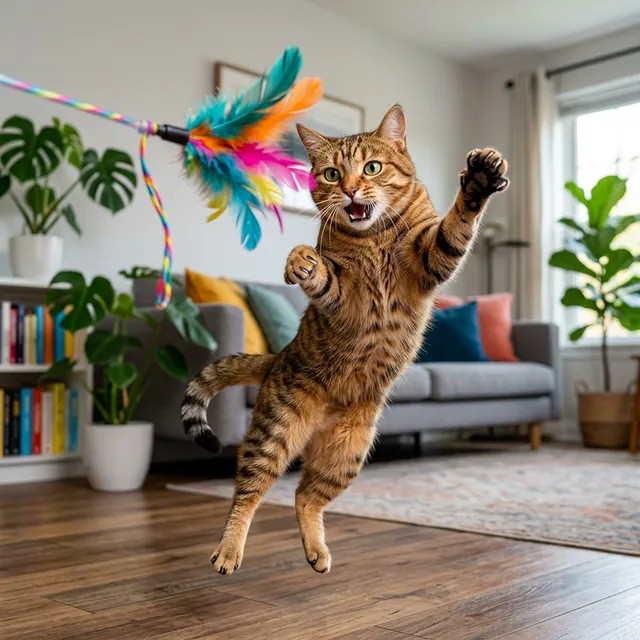
Interactive wand play is the best way to
bond and provide a physical workout.
5. Troubleshooting the
“Bored” Cat
If your cat seems uninterested in toys, it’s rarely because they are lazy. Usually,
it’s a failure of “prey behavior.” Check the following:
- Toy Rotation: Toys left on the floor eventually become “dead prey” and are
ignored. Put toys away in a bin after play and cycle them out weekly. - Energy Mismatch: If your cat is a “ground hunter” (likes mice), stop using
feather toys that fly. If they are an “aerial hunter” (likes birds), stop dragging toys on
the carpet. - No Reward: If you use a laser pointer without finishing with a physical toy
or treat, the cat’s brain remains in a high-stress “loop” because they never “caught” the
prey.
Conclusion: Play is Love
We often think of petting and cuddling as the primary ways to show love to a cat.
However, for a predatory species, “showing love” means helping them fulfill their biological
destiny. A cat that hunts well, eats well, and rests well is a cat that will share a long,
peaceful, and affectionate life with you. Make the 15-minute wand session a sacred part of your
daily ritual.
— Last update —