
Breed Profile
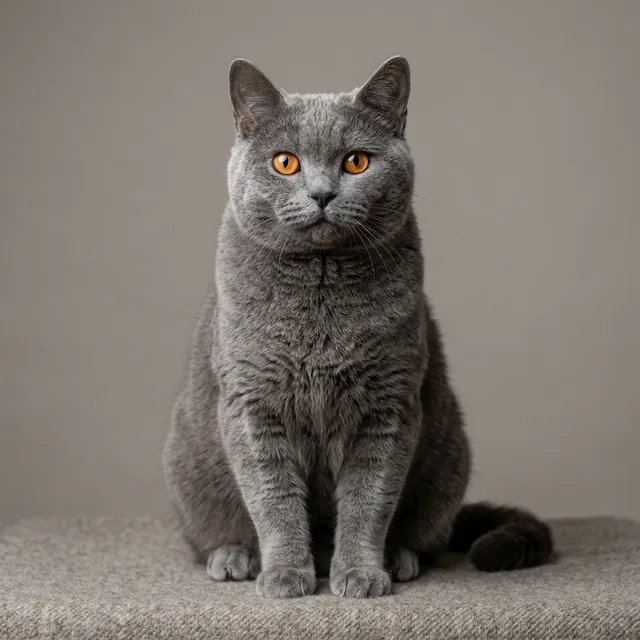
Known as the “smiling cat of France,” the Chartreux is a silent but deeply affectionate breed. With their woolly blue coats and brilliant copper eyes, they are unmistakable living monuments of French history.
⚡ Quick Look
The Chartreux is the strong, silent type. They rarely meow, preferring to communicate with chirps or simply by staring. They are excellent mousers, calm companions, and adapt well to any household, including those with dogs.
History & Origin: The Monks’ Companion
The Chartreux is one of the oldest natural breeds in Europe. Legend has it that they were bred by Carthusian monks at the Grande Chartreuse monastery in France, where they served as silent mousers and companions during meditation. While records verify their presence in France since at least the 16th century, the monk story remains a charming (though unproven) part of their lore.
The breed faced near-extinction after World War I and again after World War II. Dedicated breeders saved the Chartreux by crossing the few survivors with blue British Shorthairs and Persians, but carefully selecting to preserve the original Chartreux type. Today, they are the national cat of France.
Personality: The Potato on Toothpicks
Affectionately nicknamed “potato on toothpicks” due to their robust body and slender legs, the Chartreux has a personality as unique as its build. They are observers. They don’t demand attention loudly; they just arrive and sit beside you.
🤐 The Silent Observer
It is very rare to hear a Chartreux meow. If they do, it’s a tiny chirp that seems too small for their big body. They are perfect for apartment living.
🐭 Master Hunter
Do not let their calm demeanor fool you. They have lightning-fast reflexes and a strong prey drive. Toys (and bugs) don’t stand a chance.
They are known for their dog-like loyalty, often learning to fetch and following their owners. They are tolerant of children and travel well.
Appearance: Blue Wool
The Chartreux is often confused with the British Shorthair or Russian Blue, but it is distinct.
- Coat: The defining feature is the double coat. It is medium-short, slightly woolly, and breaks like sheepskin at the neck. It is water-resistant and dense. The color is always blue-gray, from ash to slate, with silver tips.
- Head: Broad and rounded but not spherical like the British Shorthair. The structure of the jaw gives them a permanent, sweet smile.
- Eyes: Large, round, and expressive. The color ranges from copper to deep orange, a stunning contrast against the blue fur.
Health & Care
The Chartreux is a robust, healthy breed. However, there are a few things to watch for.
Care Requirements:
- Grooming: Their woolly coat sheds, especially in spring. Use a steel comb rather than a brush to remove dead hair without damaging the undercoat. Do not bathe them unless necessary—their coat is so water-resistant it takes forever to get wet and forever to dry!
- Health: They can be prone to patellar luxation (slipping kneecaps) and kidney stones. Keeping them at a healthy weight is crucial.
Is the Chartreux Right for You?
If you want a quiet, low-drama cat that is affectionate but independent, the Chartreux is a wonderful choice. They bring a sense of calm and history to any home.
Tags
— Last update —
This breed has a medium-length wooly fur and has large, muscular, and very fast reflexes. This rare breed originated from France. Chartreux cats are less talkative compared to other breeds; they are very quiet and observant cats. They do not demand attention, and they are contented to sit quietly when you are busy. They are not aggressive cats. They are fun-loving and affectionate. This breed is tolerant and gentle with strangers, even with small children and other pets. This cat is also well- mannered even in travel. It does not require much maintenance. Spring and fall are their shedding seasons.
I am looking to find a Chartreux Cat for my very own. I have had alot of wonderful cats throughout my life time but have always desired this particular breed. I am sick with Multiple Sclerosis and I’m home on disability. So I would have plenty of time to spend with her/him, and I enjoy cuddling and talking to them. My last three cats passed on at home. These were elderly shelter kitties that I loved to death but, when its time to go they pretty much let us know..
because of my age I much prefer an adult cat age between two -five.