Breed Profile
The Turkish Van is a rare and ancient breed of cat that is famous for its love of water. Often called the “Swimming Cat,” the Turkish Van is a large, powerful, and intelligent feline that hails from the rugged region of Lake Van in eastern Turkey. With its striking white coat, colored head and tail, and mesmerizing amber or blue eyes, this breed is as beautiful as it is unique. But be warned: the Van is not a lap cat. It is an active, athletic, and mischievous companion that will keep you on your toes.
History: The Swimming Cat of Lake Van
The Turkish Van is a naturally occurring breed that has existed in the Lake Van region of Turkey for centuries. Isolated by the rugged terrain, these cats developed unique adaptations to survive the harsh climate, including a water-resistant coat and a powerful, muscular build. Local legends abound, including one that says the cats swam ashore from Noah’s Ark, which landed on nearby Mount Ararat. The distinctive colored markings on their head and tail are said to be the touch of Allah to bless them.
The breed remained largely unknown to the West until 1955, when two British photographers, Laura Lushington and Sonia Halliday, were gifted a pair of kittens while traveling in Turkey. They were amazed to see the kittens swimming in a stream to cool off. They brought the cats back to England and began a breeding program. The Governing Council of the Cat Fancy (GCCF) recognized the breed in 1969. In the United States, the first Turkish Vans arrived in 1982, and the breed was accepted for championship status by TICA in 1979 and CFA in 1994. The Turkish Van is considered a “national treasure” in Turkey, and its export is strictly regulated.
Appearance: Built for Action
The Turkish Van is a substantial cat. They are slow to mature, often taking 3 to 5 years to reach their full size and weight. Males can weigh up to 16 pounds or more, while females are slightly smaller.
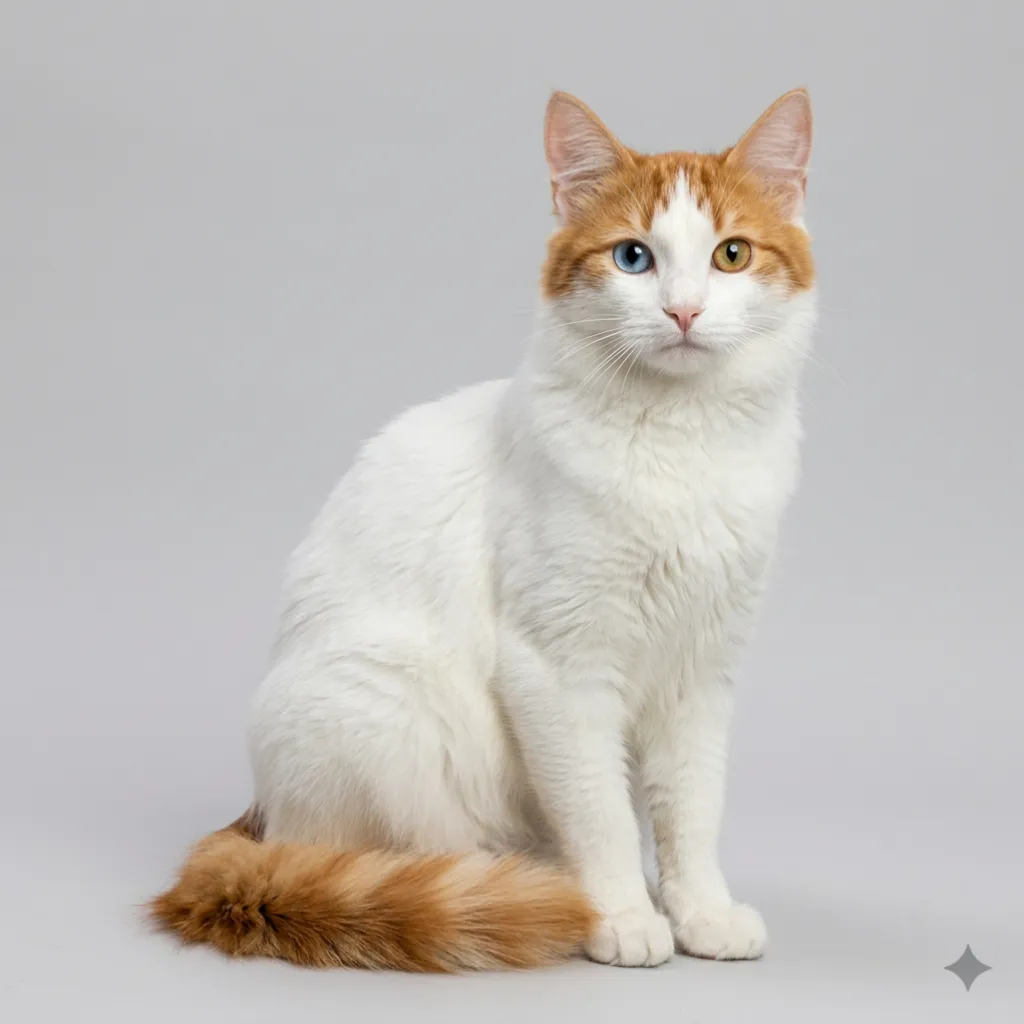
- The Van Pattern: The most distinctive feature is the “Van pattern”—a predominantly white body with color restricted to the head and tail. While small spots of color on the body are allowed, the ideal Van is mostly white.
- Coat and Texture: The coat is semi-longhaired but lacks an undercoat. This gives it a unique texture often compared to cashmere. Because it lacks a downy underlayer, it is water-resistant and does not mat easily. The coat length varies seasonally; it is shorter in the summer and fuller in the winter, complete with a magnificent ruff and bottle-brush tail.
- Head: A broad, wedge-shaped head with a medium-length nose and high cheekbones. The ears are large, set high on the head, and moderately pointed.
- Eyes: Large, oval, and expressive. Eye color can be amber, blue, or odd-eyed (one of each). The expression is alert and intelligent.
- Body: Long, sturdy, and muscular. The chest is broad and deep, giving the cat a powerful swimmer’s build. The legs are moderately long and muscular, with large round paws.
Personality: Active and Mischievous
If you are looking for a calm, decorative cat, the Turkish Van is not for you. They are high-energy, intelligent, and famously mischievous. They are often described as “dog-like” in their loyalty and behavior.
Love of Water: Unlike most cats, many Turkish Vans are fascinated by water. They may join you in the shower, play in the sink, or drop their toys into their water bowl. Some owners even provide them with a small pool to splash in!
Intelligent and Trainable: Vans are incredibly smart. They learn to open doors, cabinets, and drawers with ease. Puzzle toys and clicker training are excellent ways to keep their minds occupied. They can be taught to fetch, walk on a leash, and perform tricks.
Climbers and Jumpers: Vans love heights. They are powerful jumpers and will often be found on the highest point in the room, surveying their domain. Cat trees, shelves, and window perches are essential to keep them happy and save your curtains.
Affectionate but Independent: While they bond deeply with their families, they are not typically lap cats. They prefer to be near you rather than on you. They will follow you from room to room and “supervise” your activities but may not appreciate being held or restrained.
Care and Maintenance
Grooming
Because the Turkish Van has a single coat with no undercoat, grooming is relatively easy. The silky fur rarely mats. A weekly combing is usually sufficient to remove loose hair. During shedding seasons, more frequent grooming may be beneficial. Baths are rarely needed, but given their love of water, some Vans might actually enjoy them!
Environment
These active cats need plenty of space and enrichment. Provide sturdy scratching posts and tall cat trees. Interactive toys, feather wands, and ball tracks will help burn off their abundant energy. Because they are intelligent escape artists, ensure your home is secure.
Diet
As a large, active breed, Turkish Vans require a high-quality diet rich in protein to support their muscle mass. Wet food is excellent for hydration. Monitor their weight, as some can be prone to obesity if overfed, especially after neutering.
Health and Genetics
The Turkish Van is a robust, natural breed with few breed-specific health problems. They generally live 12-17 years.
- Hypertrophic Cardiomyopathy (HCM): A common heart condition in cats. Responsible breeders screen for this.
- Neonatal Isoerythrolysis (NI): A blood type incompatibility issue in kittens (Type B queens bred to Type A toms). Breeders can test blood types to prevent this.
- Deafness: While less common than in all-white cats, it can occur, especially in blue-eyed or odd-eyed individuals. BAER testing is recommended.
Is a Turkish Van Right for You?
Living with a Turkish Van is an adventure. They are full of personality, humor, and energy. They are best suited for active households that can provide plenty of interaction and play. If you want a cat that will play fetch, splash in the water, and be a loyal, entertaining companion for years to come, the Turkish Van is a magnificent choice.
Just remember: hide your breakables, secure your cabinets, and be prepared to share your bathroom time with a furry, water-loving supervisor!
— Last update —