Breed Profile
The Turkish Angora is a natural treasure, a cat of grace and elegance that has been cherished for centuries. Known for its silky, long coat and lithe, athletic body, this breed is often called the “Ballerina of the Cat World.” But don’t let the delicate appearance fool you—the Turkish Angora is a powerhouse of energy, intelligence, and assertive affection. Originating from the Ankara region of Turkey, this breed is not just a pretty face; it is a lively, clever companion that will keep you entertained and loved in equal measure.
History: A National Treasure
The Turkish Angora is one of the oldest natural cat breeds in existence. Genetic studies suggest they originated from African wildcats in the Fertile Crescent. These cats developed their long, silky coats naturally to survive the harsh, snowy winters of the Anatolian mountains. For centuries, they have been regarded as a national treasure in Turkey.
In the 16th century, French and British travelers brought these beautiful longhaired cats back to Europe, where they became highly fashionable among the aristocracy, including Marie Antoinette. They were used to improve the coats of Persian cats, but this nearly led to their extinction as a distinct breed outside of Turkey. By the early 20th century, the Turkish Angora had almost vanished from the West.
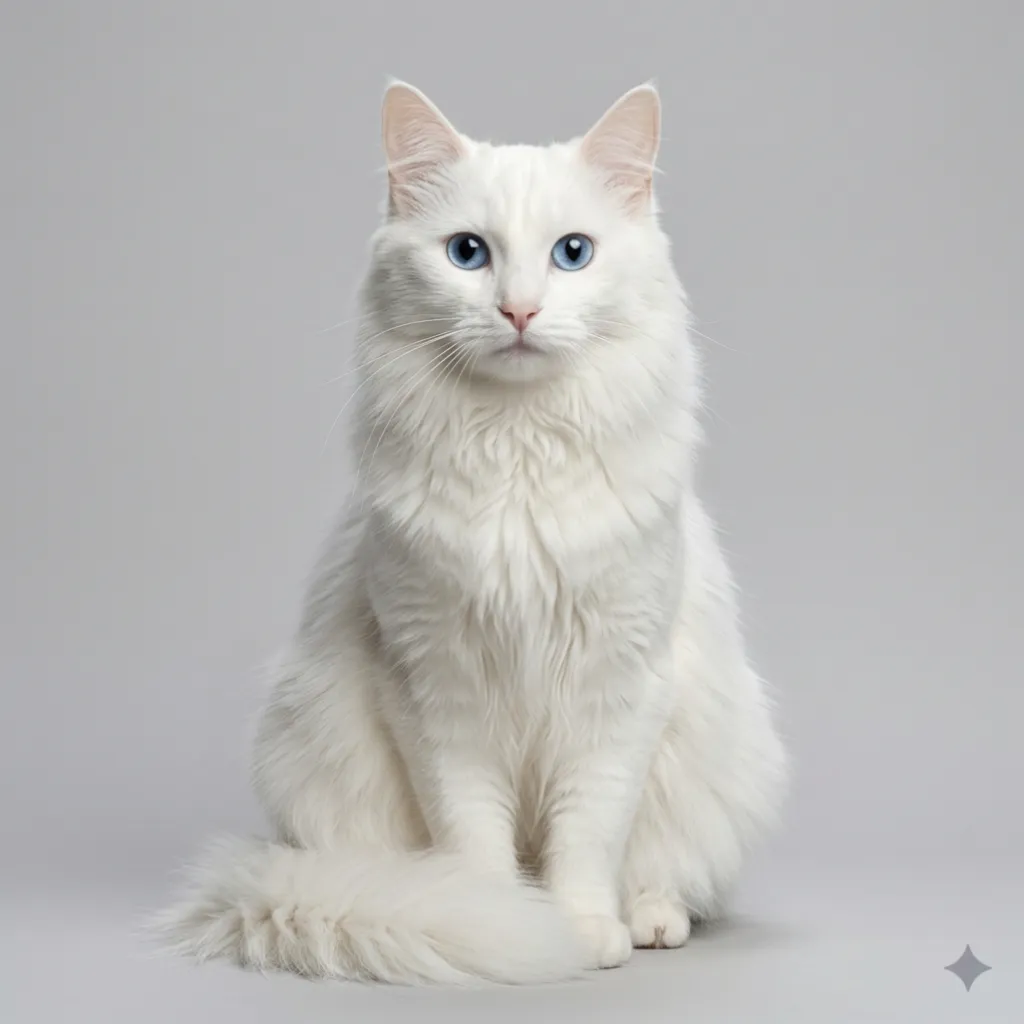
Fortunately, the Ankara Zoo established a breeding program to preserve the pure white Angoras with odd eyes (one blue, one amber), which were particularly revered. In the 1960s, an American couple, Colonel and Mrs. Walter Grant, were allowed to import a pair of these cats to the United States, reviving the breed in the West. The CFA accepted the white Turkish Angora for championship status in 1973, and colored Angoras followed in 1978. Today, all colors and patterns are accepted, though the white Angora remains the classic icon.
Appearance: The Epitome of Elegance
The Turkish Angora is a medium-sized cat with a fine, silky coat and a long, slender body that belies its strength.
- Body: Long, slender, and refined, with fine boning. The hind legs are slightly longer than the front legs, giving the cat a graceful, flowing gait. The tail is long and plumed, often carried upright like a banner.
- Head: A modified wedge shape, small to medium in size, with a flat top and vertical ears. The profile shows two planes meeting at an angle above the eyes.
- Ears: Large, wide at the base, pointed, and set high on the head. They are often tufted, adding to the alert expression.
- Eyes: Large, almond-shaped, and slightly slanted upwards. Eye color can be blue, amber, green, gold, or odd-eyed (two different colors), and it doesn’t have to correspond to the coat color.
- Coat: The single coat is silky and fine, with no woolly undercoat. This makes it shimmer when the cat moves and also means it rarely mats. The coat is longer on the ruff, breeches, and tail. While white is the most traditional color, they come in many colors and patterns, including black, blue, red, cream, tortoiseshell, and tabby.
Personality: The Alpha Cat
Turkish Angoras are known for their alpha personalities. They are not cats that will be ignored. They are highly intelligent, active, and involved in everything their owners do.
Energetic and Playful: These cats retain their kitten-like playfulness well into old age. They love to climb and will often be found on the highest point in the room—top of the refrigerator, doors, or bookshelves. They enjoy interactive toys and can be taught to fetch.
Intelligent Problem Solvers: Angoras are notoriously clever. They can learn to open cabinets, turn on faucets (many love water!), and dismantle toys to see how they work. They need mental stimulation to prevent boredom.
Social but Bossy: They are very affectionate and bond deeply with their humans, often choosing one special person. However, they like to be in charge. They get along with other pets, including dogs, but will almost always establish themselves as the boss of the household. They are helpful “supervisors” and will “help” you with cooking, cleaning, and working.
Great with Families: Their high energy levels make them good companions for active children, as long as the children treat them with respect.
Care and Maintenance
Grooming
Despite their long hair, Turkish Angoras are surprisingly low-maintenance. Their lack of an undercoat means they don’t mat easily. A weekly combing is usually sufficient to keep their coat silky and beautiful. During shedding seasons (spring and fall), more frequent grooming may be needed.
Environment
These active climbers need vertical territory. Invest in tall cat trees, wall shelves, or window perches. They are curious and agile, so ensure your home is cat-proofed—fragile items on high shelves are not safe from an exploring Angora.
Social Needs
Turkish Angoras do not like to be left alone for long periods. They crave company and interaction. If you are away often, a second energetic cat is highly recommended to keep them happy.
Health and Genetics
The Turkish Angora is generally a healthy, natural breed with a lifespan of 12-18 years. However, there are a few conditions to be aware of:
- Deafness: This is associated with the dominant white gene, especially in blue-eyed or odd-eyed white cats. Responsible breeders test hearing (BAER test) in breeding cats. However, deaf cats can live perfectly happy lives indoors.
- Ataxia: A rare neuromuscular disorder that affects kittens, causing uncoordinated movements. It is fatal but rare in well-bred lines.
- Hypertrophic Cardiomyopathy (HCM): A common heart condition in cats. Regular vet check-ups can help monitor heart health.
Is a Turkish Angora Right for You?
If you want a cat that is beautiful to look at but also a dynamic, interactive participant in your life, the Turkish Angora is perfect. They are not passive lap cats; they are active, opinionated family members.
Be prepared for a cat that will open your doors, inspect your groceries, and demand your attention when they want it. Their elegance is matched only by their zest for life. Living with a Turkish Angora is never dull—it is a daily adventure with a creature of stunning beauty and fierce intelligence.
— Last update —
I have what I think is part or more Turkish Angora.
She is solid black with yellow eyes.
She has the lynx-like straight tuft on one/both ears and the curled long hair ear furninshings.