
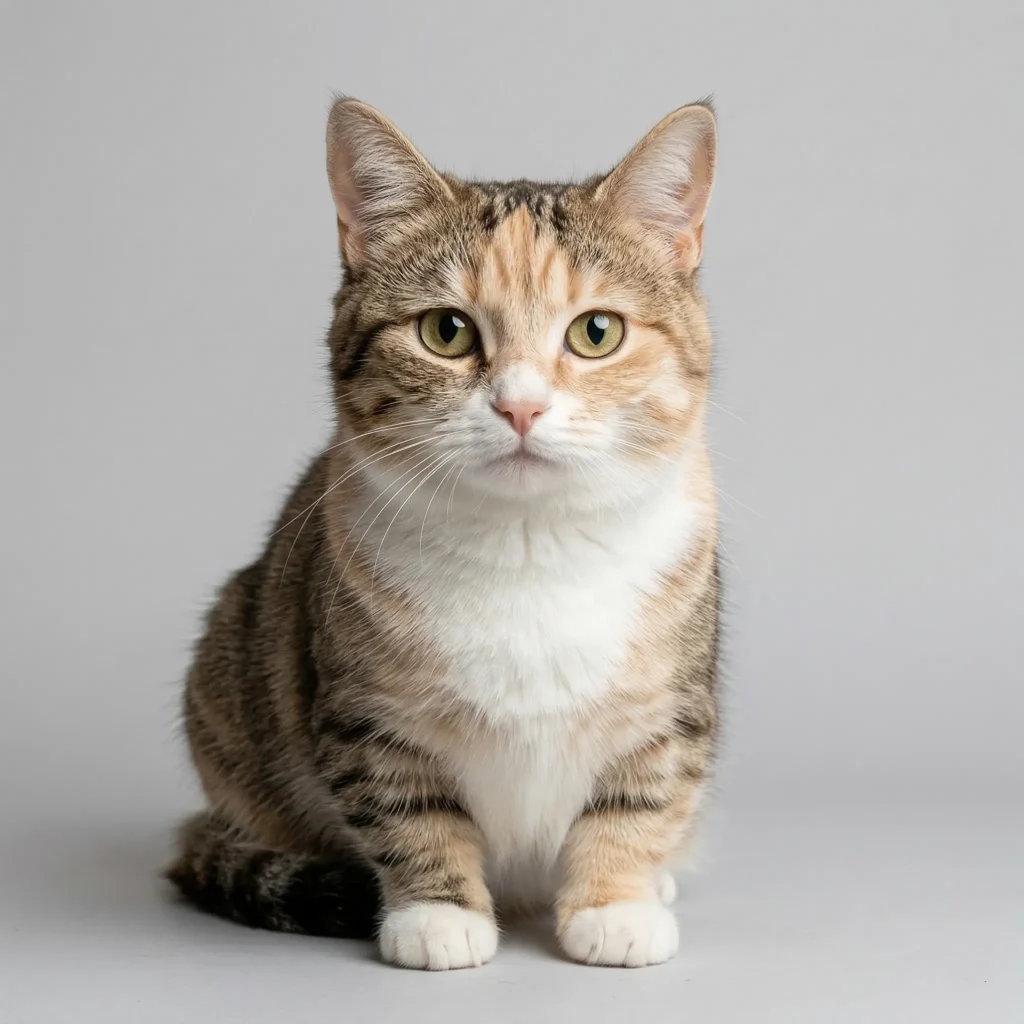
Breed Profile
The Munchkin cat is arguably the most controversial and conversation-starting breed in the feline world. Often referred to as the “sausage cat” or the “Corgi of cats,” the Munchkin is defined by its incredibly short legs, which are the result of a naturally occurring genetic mutation. But look past their short stature, and you will find a cat that is fast, agile, and bursting with energy. These cats do not know they are short; they run, play, and love just as fiercely as any long-legged feline.
History and Origins
Short-legged cats have been reported throughout history, appearing in England in the 1930s and Russia in the 1950s, but the modern Munchkin breed began in Louisiana in 1983. A music teacher named Sandra Hochenedel found two pregnant cats hiding under a truck. She kept one, a short-legged female she named Blackberry. When Blackberry gave birth, half of her kittens had short legs. Hochenedel gave one of the short-legged males, named Toulouse, to a friend. It is from Blackberry and Toulouse that today’s Munchkin breed is descended.
The breed was introduced to the public in 1991 via a televised cat show, sparking immediate controversy. Critics worried about potential health issues similar to those seen in short-legged dog breeds (like Daschunds), while supporters argued the cats were healthy and happy. After much debate and health studies, The International Cat Association (TICA) accepted the Munchkin into its New Breed development program in 1994, and it achieved full championship status in 2003.
Genetics and Health
The short legs are caused by a dominant genetic mutation that affects the long bones of the legs. This is a form of dwarfism. Because the gene is lethal if inherited from both parents (homozygous), all living Munchkin cats are heterozygous for the gene. This means they carry one copy of the Munchkin gene and one copy of the normal gene.
Despite the controversy, Munchkin cats are generally healthy and do not suffer from the same spinal problems as short-legged dogs, thanks to the flexibility of the feline spine. However, two conditions—Lordosis (excessive curvature of the spine) and Pectus Excavatum (hollowed chest)—can appear in the breed, though they are not exclusive to Munchkins.
Physical Characteristics
Aside from their short legs, Munchkins look like normal cats. They are small to medium-sized, weighing between 5 to 9 pounds. Their legs can be bowed slightly, but they should be strong. The hind legs are slightly longer than the front legs, giving them a rise from shoulders to rump.
Munchkins can be short-haired or long-haired and come in every color and pattern imaginable. Because they are often outcrossed with domestic cats to maintain a diverse gene pool, their head shapes and coat types can vary, though they generally have a sweet, open expression.
Personality and Temperament
Munchkins are known for their “magpie” behavior—they love shiny objects and will often steal jewelry or small items to hoard in secret places. They are incredibly playful, outgoing, and intelligent. Their short legs do not hamper their speed; they corner like a sports car, staying low to the ground for better traction.
While they can’t jump as high as other cats (you won’t likely find them on top of the refrigerator), they are clever climbers and will find their way onto sofas and beds. They are also known for their “prairie dog” pose, sitting up on their hind legs to get a better view of their surroundings. Munchkins are very social, getting along well with children, dogs, and other pets.
Conclusion
The Munchkin is a testament to nature’s variety. While their appearance may be unconventional, their spirit is undeniably feline. They are affectionate, fun-loving, and resilient cats that prove you don’t need long legs to live a full and happy life. If you can look past the controversy and see the cat for who they are, you’ll find a devoted and entertaining friend.
Tags
— Last update —