
More Than a Manicure: The
Multi-Functional Nature of Scratching
🔑 Key Takeaway: The
“Territorial Signpost”
Scratching is a cat’s primary method of territorial communication. It
is a visual signal (markings) and a chemical signal (pheromones). When a cat scratches your
sofa, they aren’t trying to be “bad”—they are claiming the center of the home as a safe
zone. To stop them, you must provide a superior communication outlet.
For many owners, shredded upholstery is the primary source of tension in the
human-feline relationship. However, scratching is a biological necessity tied to musculoskeletal
health and stress regulation. This guide explores the ergonomics and psychology of scratching to
help you design an environment where your furniture and your cat can coexist.
1. The Ergonomics of the
Scratch: Spinal Health
One of the most overlooked functions of scratching is its role in spinal
decompression. When a cat reaches high on a vertical post and pulls down, they are stretching
their lumbar and thoracic vertebrae.
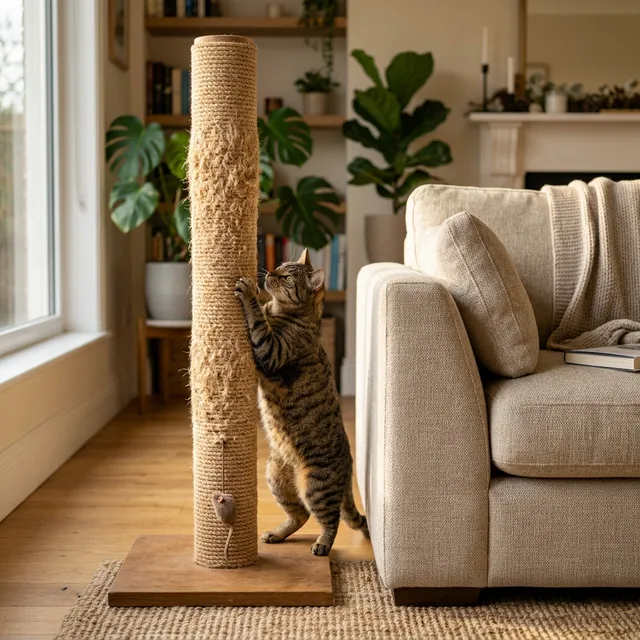
- The “Full-Body Reach” Requirement: A scratching post that is too short
(usually under 32 inches) is practically useless to an adult cat. If they cannot fully
extend their spine, they will seek out the back of a sofa or a door frame to get that vital
stretch. - The Leverage Factor: The post must be rock-solid. If it wobbles, the cat
cannot apply the necessary force to stretch their muscles, leading them to prefer the
immovable weight of your furniture. - Texture Choice: Sisal vs. Fabric: Cats distinguish between “predatory”
textures (wood/bark/sisal) and “domestic” textures (carpet). Using a carpeted post often
confusingly teaches the cat that carpet is an acceptable scratching surface.
2. The “Scratching Ritual”:
When and Where
Scratching is often tied to specific times of the day and emotional states.
Identifying your cat’s ritual is key to placement.
The Wake-Up Scratch
Many cats scratch as soon as they wake up to reactivate
their muscles. Action: Place a sturdy post directly next to their
favorite sleeping spot.
The “Home-Coming” Scratch
Cats often scratch when their owner returns home—a sign
of excitement and territorial re-assertion. Action: Place a “greeting
post” in the hallway or near the front door.
3. Advanced Deterrence:
Breaking the Habit
While you provide new outlets, you must temporarily change the “mouthfeel” and
“pawfeel” of the furniture. Punishment (spraying water, yelling) is destructive to the bond and
usually results in the cat scratching in secret.
| Deterrent | How It Works | Effectiveness |
|---|---|---|
| Sticky Paws Tape | Tactile aversion; cats hate the sticky sensation on their pads. |
High (for fabric sofas) |
| Smooth Sisal Flats | Drape over the sofa arms to provide a “sanctioned” zone on the target. |
High (for chronic scratchers) |
| Motion Air Sprays | A hiss of air startles the cat without associating the user with the correction. |
Moderate (best for night use) |
4. The Role of Pheromone
Therapy: Feliscratch and Feliway
Since scratching is communicative, we can use “chemical messages” to guide the cat.
Feliscratch is a blue liquid that simulates the visual and chemical signs of a
previous scratch. Applying it to a new post tells the cat: “This spot has already been claimed;
come and add your mark here.” Conversely, Feliway Classic applied to the
furniture signals “Safe Zone,” which can reduce the urge to mark with claws.

Correct placement and height are the two
most important factors in post adoption.
5. Maintenance: Trimming and
Toy Rotation
While nail trimming doesn’t stop the *urge* to scratch, it significantly reduces the
*damage*. Use “human” nail clippers or specialized feline scissors to remove only the sharp,
clear tip of the claw. If you’ve never done this, have a vet technician demonstrate the “quick”
identification to avoid causing pain.
Conclusion: A Scratch-Free
Future
Saving your furniture requires looking past the damage and understanding the cat’s
health needs. By providing a post that allows for a full-body stretch and placing it in a
socially significant area, you satisfy the cat’s biological and emotional imperatives.
Transitioning a cat from your sofa to a post is a process of negotiation, not a battle of wills.
— Last update —